


Lamborghini Murcielago LP670-4 SuperVeloce, 2010


Technical data - Lamborghini Murciélago LP670-4 SuperVeloce
* Frame: High strength tubular steel structure with carbon fiber components
* Bodywork: In carbon fiber, except roof and door external panels (steel)
* Steering
o Type: Mechanical (rack and pinion) power-assisted
o Right-hand turning circle: 12.55 m (41.17 ft)
* Wheels and tires
o Front: 245/35 ZR 18"
o Rear: 335/30 ZR 18"
* Engine
o Type: 12 cylinders at 60°
o Bore and stroke: 88mm x 89 mm (3.46 in x 3.50 in)
o Displacement: 6496 cc. (396.41 in³)
o Compression ratio: (11 ± 0.2):1
o Maximum power: 670 hp (493 kW) at 8000 rpm
o Maximum torque: 660 Nm (487 lb-ft)at 6500 rpm
o Engine position in vehicle: Longitudinal central-rear
o Cylinder heads and engine block: Aluminum
o Intake system: Variable geometry with 3 operating modes
* Timing
o 4 valves per cylinder, 4 overhead camshafts
o Timing gear transmission: 2 chains
o Continuous timing variator (int. and ex.): Electronically controlled
* Ignition system
o Static type ignition system with individual coils (one for each spark plug).
o Firing sequence: 1-7-4-10-2-8-6-12-3-9-5-11
* Fuel system/injection
o Lamborghini LIE electronic engine control unit, multipoint, sequential timed, DRIVE BY WIRE
o Lubrication system
o Type: Dry sump
o Recovery pumps: 2 gear pumps
o Delivery pump (high pressure): 1 gear pump
* Cooling system
o Type: Liquid cooled, with pressurized circuit
* Transmission
o Type of transmission: Permanent all-wheel drive with Viscous Traction system
o Gearbox: 6-speed e-gear
o Clutch: Dry single disc
o Clutch disc diameter: 272 mm (10.7 in)
* Transmission ratios
o Traction Control System: T.C.S.
o Gearbox - E-Gear & Manual
o 1st: 1:3.091
o 2nd: 1:2.105
o 3rd: 1:1.565
o 4th: 1:1.241
o 5th: 1:1.065
o 6th: 1:0.939
o Reverse: 1:2.692
* Brakes
o 4 self-ventilated rotors with pedal control, hydraulic transmission with dual independent circuits, one for each axle with vacuum servo.
o ABS antilock device + DRP function
o Carbo ceramic brakes (CCB)
o Handbrake: Mechanical, acting on rear wheels
o Front rotor: Ø 380 x 38 mm (Ø 14.96 in x 1.5 in)
o Front caliper cylinders: n.6 (32-36-38 mm) (1.26 in -1.42 in-1.5 in)
o Rear rotor: Ø 380 x 38 mm (Ø 14.96 in x 1.5 in)
o Rear caliper cylinders: n.6 (32-36-38 mm) (1.26 in -1.42 in-1.5 in)
* Suspension
o 4-wheel independent articulated quadrilateral system. Hydraulic shock absorbers and coaxial coil springs. Suspension with dual front and rear struts, anti-roll, anti-dive and anti-squat bar.
* Dimensions
o Wheelbase: 2665 mm (104.92 in)
o Total length: 4705 mm (185.23 in)
o Total width: 2058 mm (81.02 in)
o Total height: 1135 mm (44.69 in)
o Dry weight: 1565 Kg (3450.2 lb)
o Front track width: 1635 mm (64.37 in)
o Rear track width: 1695 mm (66.73 in)
o Front overhang: 1090 mm (42.91 in)
o Rear overhang: 950 mm (37.40 in)
o Maximum overall width with external rear-view mirrors: 2240mm (88.19 in)
o Weight distribution front/rear: 42% - 58%
* Liquid capacities
o Fuel tank: 100 Liters (26.4 gal)
o Engine oil: 12 Liters (3.17 gal)
o Gearbox oil: 3,5 Liters (0.92 gal)
o Front differential oil: 1 Liter (0.26 gal)
o Rear differential oil: 2,5 Liters (0.66 gal)
o Cooling circuit: 15 Liters (3.96 gal)
* Performance
o Top speed with small spoiler: 342 km/h (212.5 mph)
o Top speed with big wing: 337 km/h (209,4 mph)
o Acceleration 0-100km/h: 3.2 s
* Fuel Consumption (according with DIR 1999/100/CE)
o City: 32 L/100km
o Highway: 13.7 L/100
o Combined: 20.6 L/100
o CO2 Emission: 480 g/km
* Fuel Consumption USA (according with US EPA guidelines)
o Manual
+ City cycle: 8 mpg
+ Highway cycle: 13 mpg
+ Combined: 10 mpg
o E-Gear
+ City cycle: 9 mpg
+ Highway cycle: 14 mpg
+ Combined: 11 mpg
Showing posts with label 2010. Show all posts
Showing posts with label 2010. Show all posts
Lamborghini Murcielago LP670-4 SuperVeloce, 2010
Monday, June 20, 2011Lamborghini Gallardo LP550-2, 2010
Sunday, June 12, 2011Lamborghini Gallardo LP550-2, 2010

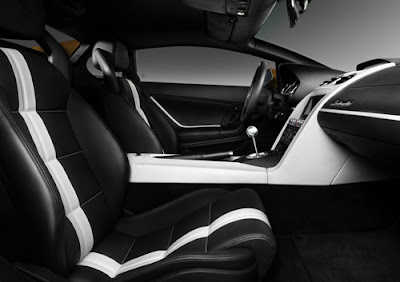
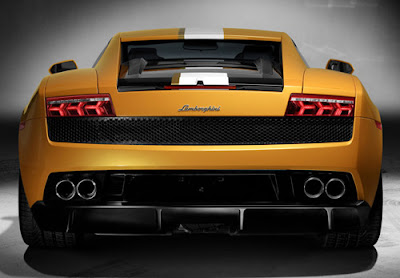
Automobili Lamborghini now presents a model in his honour and bearing his name - the Lamborghini Gallardo LP550-2 Valentino Balboni.
The latest version of the Gallardo, Lamborghini's most successful model of all time - overall, more than 9,000 units of the model range have already been produced - boasts not only its own distinctive design and exclusive equipment, but its technology is unique too, as indicated by the model badge: the 550 stands for the power output in hp and the 2 is for rear wheel drive.
For several decades, Valentino Balboni has had a distinct influence on the character of the super sports car bearing the sign of the bull. With his fine-tuning and testing work, he has helped to shape many automotive legends, from the Lamborghini Miura of the 60s through to the current Lamborghini Gallardo and Lamborghini Murciélago models. Balboni was hired in 1967 by company founder Ferruccio Lamborghini himself. From early on, it was evident that the young Balboni had a special feel for cars, that most sensitive of all instincts that connects to the 'life blood' of an automobile and defines the soul of a test driver.
Limited to 250 units
The special exclusivity of the Lamborghini Gallardo LP550-2 Valentino Balboni is guaranteed - it is limited to 250 units.
The light-footed yet extremely safe
With this latest version of the Gallardo, Lamborghini is honouring its long-standing test driver in a very special way. The Lamborghini Gallardo LP550-2 Valentino Balboni was conceived in line with his own thinking, and it meets many customers' requests for a model with a unique character, which offers a very special kind of active driving fun. The Balboni model is the only current Lamborghini that delivers its power to the road via its rear wheels alone.
The rear wheel drive has a special appeal to those sports car drivers who enjoy a particular driving style. Thanks to the eminently powerful V10 driveline, controlled oversteer is no problem - naturally always to the extent defined by the driver - because refined road manners and perfectly tuned assistance systems mean that the Lamborghini Gallardo LP550-2 Valentino Balboni is an exceptionally safe sports car to drive.
Driving fun with unique character
In order to shape this unique character that combines driving fun and safety, the engineers at Sant'Agata Bolognese have incorporated extensive modifications into the LP550-2 Valentino Balboni. It was not simply a question of moving the transmission to the rear axle, the vehicle had to be adjusted and tuned in every element of its driving dynamics. This includes springs, dampers, stabilisers and even the tyres. The aerodynamics were also adjusted to take account of the change to the power flow.
The rear axle differential, with a 45 percent limited slip, was also redeveloped, as was the calibration of the e-gear transmission. One significant point was the adjustments made to the ESP system. While the standard program is focused on high stability, the CORSA program permits greater drift angles, thus enabling drivers to enjoy the dynamics of the LP550-2 to their full extent.
The outstanding performance is guaranteed
The adjustments have also been made to the very heart of the Lamborghini Gallardo, the 5.2 litre ten-cylinder: the perfect synthesis of hi-revving pleasure, pulling power, a constantly exuberant temperament and a powerful symphony played in all keys. In the Valentino Balboni, the compact and lightweight power unit generates 405 kW (550 hp). At a dry weight of only 1,380 kilograms, this guarantees outstanding performance: the LP550-2 is catapulted from 0 to 100 km/h (0-62mph) in a breathtaking 3.9 seconds, while the top speed of 320 km/h (199 mph) guarantees its place among the ultimate in super sports cars.
The powerful elegance in its distinctive design
The Valentino Balboni is not only unique in terms of its technology: its design and equipment reinforce its exclusivity. Its classic sporting character is emphasised by a colour strip in white and gold running from the front panel over the roof and parts of the engine cover all the way to the rear spoiler, with inspiration from the classic sports cars from the '70s. This colour treatment underscores the powerful elegance of the Lamborghini Gallardo and emphasises the unique Lamborghini design DNA. The Special Edition is available in eight colours, from Bianco Monocerus through to Verde Ithaca, or Arancio Borealis to Nero Noctis. The Scorpius wheels retain their dark grey finish, while the brake callipers come in black, orange or yellow, depending on the exterior paint finish.
The Classic sporting look for the interior.
The characteristic colour combination is repeated in the interior. The basic colour of the full leather upholstery is black. Both seats, however, feature the colour strip in white. The centre console is completely upholstered in Polar white leather to create a powerful accent. A badge below the left side window bears the signature of Valentino Balboni and the production number of the car.
The exclusivity of the Valentino Balboni is augmented further by its extensive equipment. Alongside several new leather features in the interior, there is also the transparent engine cover, the rear view camera, the navigation system with Bluetooth and the lifting system for the front axle that makes it easier to drive over obstacles. In addition to the extensive standard equipment, a list of further options is available including e-gear transmission and carbon ceramic brakes.
Hyundai i-flow Concept, 2010
Saturday, May 28, 2011Hyundai i-flow Concept, 2010


Making its global debut at the 2010 Geneva Motor Show, the Hyundai i-flow Concept car carries forward the company's evocative new form language, 'fluidic sculpture'. The flowing, elegant lines not only create a bionic, futuristic shape, but also contribute to exceptional aerodynamics, helping to reduce the car's CO2 output to just 85g/km and fuel consumption to only 3l/100km.
Hyundai's first diesel hybrid powertrain is also a key factor in delivering such an environmentally-conscious return, as is the application of next-generation materials and technologies developed in cooperation with leading chemical company BASF.
Previewing a future D-segment contender
With an overall length of 4.780mm and a 2.800mm wheelbase, the Hyundai i-flow Concept brings new ideas and a pioneering form to the traditional European D-segment. The dramatically-sculpted forms of the interior and exterior make for a striking sports sedan, and its width and height (1.850mm and 1.420mm respectively) give it an athletic stance.
The name i-flow reflects the exceptionally aerodynamic shape and the flowing lines of the concept car's eye-catching styling, and retains the 'i' prefix of Hyundai's established alphanumeric nomenclature for Europe. In 2011 Hyundai will bring into production a new challenger in the segment, drawing on the Hyundai i-flow Concept's sleek styling and innovative technology.
Inside: minimum weight, maximum space and a bionic feel
The interior of Hyundai i-flow Concept redefines the perception of space in a sedan bodystyle. Fundamental elements, such as the seats and center console, were crafted for minimal weight and volume using cutting-edge materials from BASF - one of the world's leading automotive suppliers.
The seats, for example, were developed in conjunction with BASF using advanced stress analysis, which highlighted the unnecessary mass areas and pointed towards an optimized lightweight seat structure. 'Steron', a BASF material, gives the seats a highly-resilient quality, excellent breathability and a high-tech touch.
The upper dashboard, meanwhile, is treated with Elastoskin, a sprayed skin from BASF for a sophisticated, shimmering finish.
This technical, meticulous approach combines with an abundance of natural materials to engender a bionic feel in the cabin, further symbolized by the green color tones and the leaf-like shadows projected from the roof's semi-transparent dye-sensitized solar cells.
The cockpit's main interface centers around an expansive, contoured screen, which recognizes not only touch but also gestural inputs along its fascia-wide display. The fluidic forms of the exterior are echoed in the Hyundai i-flow Concept's cabin, where continuous lines sweep from the dashboard, through the doors to the open storage area at the rear.
Energy Conservation
BASF and Hyundai R&D engineers have developed thermal engine encapsulation, which ensures that the engine reaches optimum operating temperature more quickly, by retaining heat when the car is at idle. Where a non-insulated engine would take three hours to drop to 40°C, the Hyundai i-flow Concept will stay above that temperature for 14 hours. This translates into fuel savings and emissions cuts of 5 per cent during summer and up to 9 per cent during winter.
Energy Harvesting
Another pioneering technique introduced in collaboration with BASF is thermo-electric waste heat recovery. This process equates to further reductions in fuel consumption, 5% at highest driving. In fact, up to half of the electrical energy consumed by Hyundai i-flow Concept at 80kph - 250 watts - can be recovered through the work of a thermo-electric generator. Harvested energy from hot exhaust gases is recaptured by this generator which is fitted into the exhaust manifold. The thermal electric generator then converts the wasted heat into useful electrical energy to help power auxiliary systems.
Liquid Metal, a coating with the appearance of a glossy skin made of liquid metal, has been developed by BASF Coatings. Special effect pigments in this eco-friendly waterborne coating system let the surface appear as polished metal with targeted mirror like reflections - this gives a liquid skin appearance to the car's exterior and increases the tension of the surface in the same time. The high color saturation on the Hyundai i-flow Concept adds an energizing charisma to the Hyundai concept car. The typical high contrast between highlight and flop underlines the sculptural impact of the Hyundai i-flow Concept.
Cadillac Aera Concept, 2010
Tuesday, March 1, 2011Cadillac Aera Concept, 2010


The Cadillac Aera Concept won the 2010 Los Angeles Auto Show Design Challenge, tying with Smart and besting entries from seven other automakers including Mercedes-Benz, Honda, Nissan, Toyota and Maybach. GM Advanced Design has now won the honor more times than any other design team; this is its third victory since 2005.
The Cadillac Aera Concept is powered by compressed air via a highly efficient Pneumatic Drive System that has a 10,000-psi composite air storage tank with capacity for a 1,000-mile range. Flexible, pressurized air cells in the exterior skin, similar to material developed for the NASA Mars Rover airbags, enhance passive safety and interior comfort. The flexible polymer skin optimizes aerodynamics and functions as an ultra-lightweight alternative to conventional body panels and glass.
Cadillac Aera's body utilizes a 3D lattice, mono-formed frame that was designed to be similar to configurations found consistently in nature. The structure is formed from unique, alloy-utilizing, semi-solid freeform manufacturing, creating a naturally strong, extremely lightweight frame. All major body parts, including interior components, are essentially "grown" into a single part lattice structure.
The interior is crafted with an ultra-light recyclable polymer that allows for HVAC channels, fully adjustable seating, storage and comfort features all in one mono-form structure. Generous storage space accommodates luggage for two people.
The concept was conceived in GM's North Hollywood Advanced Design Studio by Frank Saucedo, director; Phil Tanioka, vehicle designer; Brent Wickham, concept strategist; Shawn Moghadam, layout designer and Timonen, the project manager. Earlier this week, GM commemorated 10 years of advanced design at the L.A. area studio.
The Design Challenge is part of the Design Los Angeles automobile designers' conference and has evolved into an integral element of the Los Angeles Auto Show. Design Los Angeles connects those working in the design industry with well-known automotive design industry leaders. Los Angeles is home to the world's largest concentration of manufacturer design studios, representing automakers from North America, Europe and Asia. It is also the home of Art Center College of Design, one of the world's foremost transportation design institutions where many of today's leading automotive designers began their careers.
The Cadillac Aera Concept is powered by compressed air via a highly efficient Pneumatic Drive System that has a 10,000-psi composite air storage tank with capacity for a 1,000-mile range. Flexible, pressurized air cells in the exterior skin, similar to material developed for the NASA Mars Rover airbags, enhance passive safety and interior comfort. The flexible polymer skin optimizes aerodynamics and functions as an ultra-lightweight alternative to conventional body panels and glass.
Cadillac Aera's body utilizes a 3D lattice, mono-formed frame that was designed to be similar to configurations found consistently in nature. The structure is formed from unique, alloy-utilizing, semi-solid freeform manufacturing, creating a naturally strong, extremely lightweight frame. All major body parts, including interior components, are essentially "grown" into a single part lattice structure.
The interior is crafted with an ultra-light recyclable polymer that allows for HVAC channels, fully adjustable seating, storage and comfort features all in one mono-form structure. Generous storage space accommodates luggage for two people.
The concept was conceived in GM's North Hollywood Advanced Design Studio by Frank Saucedo, director; Phil Tanioka, vehicle designer; Brent Wickham, concept strategist; Shawn Moghadam, layout designer and Timonen, the project manager. Earlier this week, GM commemorated 10 years of advanced design at the L.A. area studio.
The Design Challenge is part of the Design Los Angeles automobile designers' conference and has evolved into an integral element of the Los Angeles Auto Show. Design Los Angeles connects those working in the design industry with well-known automotive design industry leaders. Los Angeles is home to the world's largest concentration of manufacturer design studios, representing automakers from North America, Europe and Asia. It is also the home of Art Center College of Design, one of the world's foremost transportation design institutions where many of today's leading automotive designers began their careers.
Acura MDX, 2010
Thursday, February 17, 2011Acura MDX, 2010


The award-winning Acura MDX luxury SUV sets even higher standards in 2010 for styling, performance, technology and safety. For 2010, the Acura MDX features a fresh new exterior look, revised powertrain that includes a new 6-speed automatic, chassis refinements, more comfort, and improved technology along with the introduction of an all-new Advance Package - making the class leader even better.
Visually, the 7-passenger 2010 Acura MDX receives more aggressive styling in the form of new front and rear bodywork, a bold new front grille and numerous new trim enhancements. Under the hood, the Acura MDX receives a more refined 3.7L V-6 engine that teams with an all-new 6-speed automatic transmission for better performance and improved fuel efficiency. Inside, the Acura MDX receives a host of new features and technologies that make it even more luxurious.
Ride and handling have been enhanced as a result of a revised power steering system, stiffer rear trailing arm mounting, body rigidity improvements and reduced overall NVH. Thanks to Acura's exclusive Super Handling All-Wheel Drive™ (SH-AWD®) system, the Acura MDX's handling provides confident on- and off-road handling in addition to excellent foul weather performance.
To expand the dynamic capabilities for 2010 MDX, a new Advance package, with a revised Active Damper System and larger 19-inch wheels and tires, further enhances handling while retaining the comfortable, quiet and controlled ride quality expected of a luxury vehicle.
The 2010 Acura MDX exterior gets a fresh new look as a result of Acura's signature design front grille, a new front fascia, revised hood, new side sills, a new rear fascia matched with rolled edge polished stainless-steel exhaust finishers, revised taillights with brighter LED lights, many new trim pieces and available 19-inch diameter 7-spoke aluminum-alloy wheels.
Inside, the 2010 MDX benefits from the expanded use of Milano leather, a new thicker sport steering wheel with racing-inspired paddle shifters, new gauges, easier to understand button placement for center stack functions, available ventilated front seats and upgraded interior trim. In addition, a host of new technology is available including AcuraLink Real-Time Weather™ and Traffic Rerouting™. Other available features include a new full VGA 8-inch navigation screen, a new rear view camera with three unique view choices, upgraded rear entertainment system, an updated audio system with a dedicated 15 GB hard disk drive (HDD) and USB port connectivity, even more LED lighting - and the list goes on.
Powertrain
For 2010 the Acura MDX receives a new 3.7-liter VTEC® V-6. The engine continues Acura's longstanding mission to provide V-8 level horsepower and torque while retaining the size and fuel efficiency of a V-6. Based on the previous Acura MDX's powerplant, the newly refined 3.7L V-6 develops 300 horsepower and 270 lb-ft of torque to provide immediate throttle response, outstanding low- and mid-range torque and excellent high-rpm power.
Visually, the 7-passenger 2010 Acura MDX receives more aggressive styling in the form of new front and rear bodywork, a bold new front grille and numerous new trim enhancements. Under the hood, the Acura MDX receives a more refined 3.7L V-6 engine that teams with an all-new 6-speed automatic transmission for better performance and improved fuel efficiency. Inside, the Acura MDX receives a host of new features and technologies that make it even more luxurious.
Ride and handling have been enhanced as a result of a revised power steering system, stiffer rear trailing arm mounting, body rigidity improvements and reduced overall NVH. Thanks to Acura's exclusive Super Handling All-Wheel Drive™ (SH-AWD®) system, the Acura MDX's handling provides confident on- and off-road handling in addition to excellent foul weather performance.
To expand the dynamic capabilities for 2010 MDX, a new Advance package, with a revised Active Damper System and larger 19-inch wheels and tires, further enhances handling while retaining the comfortable, quiet and controlled ride quality expected of a luxury vehicle.
The 2010 Acura MDX exterior gets a fresh new look as a result of Acura's signature design front grille, a new front fascia, revised hood, new side sills, a new rear fascia matched with rolled edge polished stainless-steel exhaust finishers, revised taillights with brighter LED lights, many new trim pieces and available 19-inch diameter 7-spoke aluminum-alloy wheels.
Inside, the 2010 MDX benefits from the expanded use of Milano leather, a new thicker sport steering wheel with racing-inspired paddle shifters, new gauges, easier to understand button placement for center stack functions, available ventilated front seats and upgraded interior trim. In addition, a host of new technology is available including AcuraLink Real-Time Weather™ and Traffic Rerouting™. Other available features include a new full VGA 8-inch navigation screen, a new rear view camera with three unique view choices, upgraded rear entertainment system, an updated audio system with a dedicated 15 GB hard disk drive (HDD) and USB port connectivity, even more LED lighting - and the list goes on.
Powertrain
For 2010 the Acura MDX receives a new 3.7-liter VTEC® V-6. The engine continues Acura's longstanding mission to provide V-8 level horsepower and torque while retaining the size and fuel efficiency of a V-6. Based on the previous Acura MDX's powerplant, the newly refined 3.7L V-6 develops 300 horsepower and 270 lb-ft of torque to provide immediate throttle response, outstanding low- and mid-range torque and excellent high-rpm power.
Lamborghini Murcielago LP650-4 Roadster, 2010
Tuesday, February 8, 2011Lamborghini Murcielago LP650-4 Roadster, 2010


The automobile Lamborghini has released the first photographs of a limited edition Lamborghini Murciélago LP650-4 Roadster.
The Roadster version of the Murciélago will offer an uprated 6.5 litre V12 engine that produces 650 hp (478 kW) along with permanent four-wheel drive: hence the model's LP 650-4 moniker.
With 660 Nm of torque, top performance is at 0-100km/h (0-62mph) in 3.4 seconds. The top speed is around 330 Km/h (205mph).
The special edition model will be produced in a limited volume (50 units only), with a Grigio Telesto exterior that combines grey bodywork with a special bright orange Arancio LP 650-4 featured on the front spoiler and sills. The LP 650-4 logo applied to the car's exterior is recognition of the car's increased power. The car features orange brake calipers and a transparent V12-engine cover, which shows off the V12 engine behind the driver.
The interior features echo the car's striking grey-and-orange exterior: besides the orange touches, there is an asymmetric dash design, with black Alcantara Nera on the driver's side, including door panel and central tunnel, and black leather Nero Perseus on the passenger's side.
The increased power of the Murciélago engine, from 640 to 650 hp, will be unique to the Lamborghini Murciélago LP650-4 Roadster: it demonstrates even further the developments that Lamborghini is able to offer from a current engine, and creates the exclusive characteristic of the Lamborghini Murciélago LP650-4 Roadster.
The Roadster version of the Murciélago will offer an uprated 6.5 litre V12 engine that produces 650 hp (478 kW) along with permanent four-wheel drive: hence the model's LP 650-4 moniker.
With 660 Nm of torque, top performance is at 0-100km/h (0-62mph) in 3.4 seconds. The top speed is around 330 Km/h (205mph).
The special edition model will be produced in a limited volume (50 units only), with a Grigio Telesto exterior that combines grey bodywork with a special bright orange Arancio LP 650-4 featured on the front spoiler and sills. The LP 650-4 logo applied to the car's exterior is recognition of the car's increased power. The car features orange brake calipers and a transparent V12-engine cover, which shows off the V12 engine behind the driver.
The interior features echo the car's striking grey-and-orange exterior: besides the orange touches, there is an asymmetric dash design, with black Alcantara Nera on the driver's side, including door panel and central tunnel, and black leather Nero Perseus on the passenger's side.
The increased power of the Murciélago engine, from 640 to 650 hp, will be unique to the Lamborghini Murciélago LP650-4 Roadster: it demonstrates even further the developments that Lamborghini is able to offer from a current engine, and creates the exclusive characteristic of the Lamborghini Murciélago LP650-4 Roadster.
BMW ActiveE Concept, 2010
Tuesday, January 4, 2011BMW ActiveE Concept, 2010


Introducing the BMW ActiveE Concept, the latest electric vehicle project under BMW Group's initiative to produce vehicles that explore solutions to minimize environmental impacts while preserving the kinetic driving experience for which BMW has long been known. The BMW ActiveE Concept follows the all-electric MINI E as the second large-scale electric vehicle test program to be conducted in the hands of interested customers.
The BMW Group presents yet another milestone along the way to achieving CO2-free mobility. The BMW ActiveE Concept provides a taste of a purely electrically powered BMW. Focused on the requirements of practical use, the study is based on the BMW 1-Series Coupe and embodies the outstanding agility and characteristic driving pleasure of the BMW 1-Series for the first time as part of an emissions-free drive concept.
With the world premiere of the BMW ActiveE Concept at the 2010 North American International Auto Show (NAIAS) in Detroit, the BMW Group is highlighting the continuation of its research and development activities in the field of electro-mobility. The field tests with the MINI E as part of project i in the US and Europe have already provided important insights into the demands required of future production electric vehicles. As a second step, project i has begun development of a second trial fleet of electric vehicles based on the BMW ActiveE Concept. These vehicles are likewise intended for everyday use by private and select fleet customers as part of a large-scale field test. The insights gathered in the process will be fed into the development of an electrically powered serial production vehicle which the BMW Group will put on the market under a sub-brand of BMW in the first half of the next decade.
The BMW ActiveE Concept has allowed BMW to explore new vehicle packaging solutions and components which will be crucial to the success of the Megacity Vehicle. The intelligent integration of drive components within the existing vehicle package of the BMW 1-Series Coupe offers the opportunity to provide four full-size seats and a luggage compartment with a capacity of 200 litres / 7 cu ft. The motor, specially developed for the model and located in the rear axle, delivers 125 kW/170 hp and provides maximum torque of 250 Nm / 184 lb-ft. It accelerates the vehicle in less than 9 seconds from zero to 100 km/h (0-60 mph in approx. 8.5 seconds).
The electric drive system draws its energy from new, advanced lithium-ion battery pack developed jointly by BMW and the co-operation partner SB LiMotive especially for the BMW ActiveE Concept. They enable a range of approx. 160 kilometres (100 miles) in everyday use. An intelligent battery management system helps achieve this range largely independently of external climatic conditions. Additionally, the charging period required for the lithium-ion batteries is very short. On the European power grid, the battery pack can be fully charged in just 3 hours at a wall box with a current of 50 ampere at 230/240 volts. In North America, using a high-current (32 ampere continuous) residential wall box, the charge time is about 4.5 hours.
Innovative technology for sheer driving pleasure without CO2 emissions.
The BMW ActiveE Concept embodies a whole new dimension of purely electrically powered mobility. The dynamic potential and high torque of the drive system, along with the rear-wheel drive which is a hallmark of the brand, guarantees the characteristic sheer driving pleasure which is typical of BMW - but without any CO2 emissions. An impressive range of functions and a high level of suitability for everyday use are additional features of this concept, which defines electro-mobility in true BMW style.
The BMW Group attaches key importance to electro-mobility in the development of future-oriented vehicle concepts and drive systems as part of its EfficientDynamics strategy. In the medium term, BMW Group is developing innovative vehicle concepts for emissions-free mobility in urban areas. This so-called Megacity Vehicle will also be offered with an electrical drivetrain. The BMW ActiveE Concept represents a further step towards the realization of this concept. Components of the vehicle may be developed further for later integration into the Megacity Vehicle.
Electric drive: emissions-free, powerful and compact.
The BMW ActiveE Concept offers the prospect of characteristic BMW driving pleasure without exhaust emissions. The requirements for electro-mobility with characteristic BMW properties are being created based on ongoing development in the powertrain. The latest outcome is a new synchronous electric motor tailored to the BMW ActiveE Concept. It offers a high level of efficiency, power delivery, and compact construction.
The maximum output of the new electric drive is 125 kW/170 hp. The maximum torque of 250 Nm / 184 lb-ft is available from a standstill as is typical for electric motors. The torque remains available over an unusually broad load range. Unlike asynchronous electric motors, the new power unit provides a relatively high level of torque even at higher engine speeds and road speeds; at increased load the torque is not reduced abruptly but decreases gradually. The torque curve at higher engine speeds is therefore much more similar to the pattern familiar from combustion engines.
The vehicle concept and drive system provide the agility and dynamic acceleration performance which are characteristic of the BMW 1-Series Coupe. Based on realistic simulations, a figure of less than 9 seconds was measured for the sprint from zero to 100 km/h (0-60 miles in 8.5 seconds), with the 60 km/h mark being reached after less than
4.5 seconds. The maximum speed of the vehicle is electronically limited at around 145 km/h or 90 mph.
The innovative character of the electric drive is also reflected in the optimized ratio between engine output and space requirements: the compact power package is fully integrated in the rear axle of the BMW ActiveE Concept. Here the drive system occupies the space required in conventional vehicles by the differential, whose function is integrated in the drive system.
Recuperation of energy increases range.
In the purely electric powered BMW, the driver may control deceleration as well as acceleration through the movement of the accelerator pedal. As soon as the driver's foot is removed from the accelerator, the electric motor performs the function of a generator, converting the vehicle's kinetic energy into electric power and storing it in the battery pack. Intensive use of this so-called energy recuperation process by the motor increases the range by up to 20%.
At the same time, a brake torque is created which results in effective deceleration of the vehicle. This response enables a very comfortable driving style, especially at medium and constantly varying speeds. In urban traffic, some 75 percent of all deceleration manoeuvres are initiated without the need for the brake pedal. During Brake Energy Regeneration function, the vehicle's brake lights are illuminated.
The brake system is fitted with an electric vacuum pump which is activated on demand. Along with the Electric Power Steering (EPS) familiar from the production models of the BMW 1-Series, these features contribute to an increase in the overall efficiency of the vehicle.
Innovative lithium-ion battery pack with its own liquid cooling.
The lithium-ion battery pack specially developed for this vehicle supplies energy to the motor and all other functions of the BMW ActiveE Concept. The high-voltage battery units offer a particularly high storage capacity and durability. For the first time, storage cells are used which were developed especially for use in automobiles by the BMW Group in collaboration with the co-operation partner SB LiMotive. Powerful battery cells are key when it comes to designing production vehicles with electric drive. Through the collaboration of the BMW Group with a joint venture of the companies Bosch and Samsung SDI [SB LiMotive], leading expertise in the area of battery technology and electro-mobility has been brought together. The aim is to use the best available technology in the area of energy storage as part of the development of the Megacity Vehicle.
Characteristic BMW driving experience, space of a BMW 1-Series Coupe.
The positioning of the battery pack shifts the vehicle's center of gravity downwards. Also, the battery cell layout within the vehicle preserves the near 50-50 weight distribution characteristic of BMW vehicles. In this respect, the BMW ActiveE Concept offers ideal conditions for driving experience characterized by a high level of agility.
Modern charging technology: fresh energy both swiftly and flexibly.
This gives the driver considerably greater flexibility in using the vehicle. In addition to using a high amperage wall box - a supply system installed in the user's home optimized to reduce charging times- it is also possible to use conventional power outlets or publicly accessible charging stations made available in co-operation with energy suppliers. In this way, stopovers can be used to extend the travel range of the vehicle when needed.
The lithium-ion batteries of the BMW ActiveE Concept set a new benchmark for energy storage systems in electric vehicles. Regardless of the voltage and amperage available, they build up a remarkably high energy capacity within a very short time. On the European power grid, the battery pack can be fully charged in just 3 hours at a wall box with a current of 50 ampere at 230/240 volts. In North America, using a high-current (32 ampere continuous), 220 volts residential wall box, the charge time is about 4.5 hours.
Specific remote control functions via BMW ConnectedDrive.
Additional trips can also be conveniently prepared using the innovative remote control functions. For example, the driver can check the charge status of the vehicle batteries and the currently available travel range while at his workplace or sitting in a café. This makes it quick and convenient to find out whether an additional trip can be made before driving home before the energy supply runs out. The driver gains additional flexibility in being able to search for public charging stations in the vicinity of any given location. Based on the information relayed to the mobile phone, he can quickly determine whether a spontaneously planned stopover can be used to charge the vehicle batteries.
Design: unmistakably a BMW 1-Series Coupe.
The technology of the BMW ActiveE Concept is highlighted through unique design features. The BMW ActiveE Concept is unmistakably based on the BMW 1-Series Coupe, well-known for its outstanding agility and efficiency. With its powerful proportions, the BMW ActiveE Concept also embodies an especially sporty form. Its side view is dominated by the striking shoulder line and the short overhangs. In addition, the BMW ActiveE Concept boasts striking light alloy wheels which are aerodynamically optimized. The distinctive appearance is partly created by the concept-specific rear apron which is completely closed, demonstrating that the vehicle is entirely emissions-free due to the lack of an exhaust system. There is a recognisable differentiation from the production model of the BMW 1-Series Coupe with the body finish in Liquid White metallic, as well as graphic elements derived from printed circuits in Electric Blue on the hood, doors, roof and trunk lid, as well as the lettering "ActiveE", "eDrive" and "Efficient Dynamics" on the doors and side panels. The following elements also reflect the special character of this electrically powered vehicle: a blue illuminated charging connection behind a translucent filler cap, a glowing blue roof fin and kidney rods finished in blue. Blue rings on the tyres also make for a visual enlargement of the 18-inch wheels.
In the interior, individual details highlight the distinctive style of the study and are functionally associated with the electric drive. Among other things, the interior of the BMW ActiveE Concept has special leather seats with embossed graphic elements and blue contrasting stitching. The instrument panel and door trim panels have strips in Liquid White. The decor strip in the instrument panel is finished with a three-dimensional rear-lit ActiveE graphic. The blue illuminated start/stop button and the selector lever knob emblem in White/Blue round off the overall graphic concept. What is more, the instrument panel and the central display have been enhanced to monitor the electric drive.
The BMW Group presents yet another milestone along the way to achieving CO2-free mobility. The BMW ActiveE Concept provides a taste of a purely electrically powered BMW. Focused on the requirements of practical use, the study is based on the BMW 1-Series Coupe and embodies the outstanding agility and characteristic driving pleasure of the BMW 1-Series for the first time as part of an emissions-free drive concept.
With the world premiere of the BMW ActiveE Concept at the 2010 North American International Auto Show (NAIAS) in Detroit, the BMW Group is highlighting the continuation of its research and development activities in the field of electro-mobility. The field tests with the MINI E as part of project i in the US and Europe have already provided important insights into the demands required of future production electric vehicles. As a second step, project i has begun development of a second trial fleet of electric vehicles based on the BMW ActiveE Concept. These vehicles are likewise intended for everyday use by private and select fleet customers as part of a large-scale field test. The insights gathered in the process will be fed into the development of an electrically powered serial production vehicle which the BMW Group will put on the market under a sub-brand of BMW in the first half of the next decade.
The BMW ActiveE Concept has allowed BMW to explore new vehicle packaging solutions and components which will be crucial to the success of the Megacity Vehicle. The intelligent integration of drive components within the existing vehicle package of the BMW 1-Series Coupe offers the opportunity to provide four full-size seats and a luggage compartment with a capacity of 200 litres / 7 cu ft. The motor, specially developed for the model and located in the rear axle, delivers 125 kW/170 hp and provides maximum torque of 250 Nm / 184 lb-ft. It accelerates the vehicle in less than 9 seconds from zero to 100 km/h (0-60 mph in approx. 8.5 seconds).
The electric drive system draws its energy from new, advanced lithium-ion battery pack developed jointly by BMW and the co-operation partner SB LiMotive especially for the BMW ActiveE Concept. They enable a range of approx. 160 kilometres (100 miles) in everyday use. An intelligent battery management system helps achieve this range largely independently of external climatic conditions. Additionally, the charging period required for the lithium-ion batteries is very short. On the European power grid, the battery pack can be fully charged in just 3 hours at a wall box with a current of 50 ampere at 230/240 volts. In North America, using a high-current (32 ampere continuous) residential wall box, the charge time is about 4.5 hours.
Innovative technology for sheer driving pleasure without CO2 emissions.
The BMW ActiveE Concept embodies a whole new dimension of purely electrically powered mobility. The dynamic potential and high torque of the drive system, along with the rear-wheel drive which is a hallmark of the brand, guarantees the characteristic sheer driving pleasure which is typical of BMW - but without any CO2 emissions. An impressive range of functions and a high level of suitability for everyday use are additional features of this concept, which defines electro-mobility in true BMW style.
The BMW Group attaches key importance to electro-mobility in the development of future-oriented vehicle concepts and drive systems as part of its EfficientDynamics strategy. In the medium term, BMW Group is developing innovative vehicle concepts for emissions-free mobility in urban areas. This so-called Megacity Vehicle will also be offered with an electrical drivetrain. The BMW ActiveE Concept represents a further step towards the realization of this concept. Components of the vehicle may be developed further for later integration into the Megacity Vehicle.
Electric drive: emissions-free, powerful and compact.
The BMW ActiveE Concept offers the prospect of characteristic BMW driving pleasure without exhaust emissions. The requirements for electro-mobility with characteristic BMW properties are being created based on ongoing development in the powertrain. The latest outcome is a new synchronous electric motor tailored to the BMW ActiveE Concept. It offers a high level of efficiency, power delivery, and compact construction.
The maximum output of the new electric drive is 125 kW/170 hp. The maximum torque of 250 Nm / 184 lb-ft is available from a standstill as is typical for electric motors. The torque remains available over an unusually broad load range. Unlike asynchronous electric motors, the new power unit provides a relatively high level of torque even at higher engine speeds and road speeds; at increased load the torque is not reduced abruptly but decreases gradually. The torque curve at higher engine speeds is therefore much more similar to the pattern familiar from combustion engines.
The vehicle concept and drive system provide the agility and dynamic acceleration performance which are characteristic of the BMW 1-Series Coupe. Based on realistic simulations, a figure of less than 9 seconds was measured for the sprint from zero to 100 km/h (0-60 miles in 8.5 seconds), with the 60 km/h mark being reached after less than
4.5 seconds. The maximum speed of the vehicle is electronically limited at around 145 km/h or 90 mph.
The innovative character of the electric drive is also reflected in the optimized ratio between engine output and space requirements: the compact power package is fully integrated in the rear axle of the BMW ActiveE Concept. Here the drive system occupies the space required in conventional vehicles by the differential, whose function is integrated in the drive system.
Recuperation of energy increases range.
In the purely electric powered BMW, the driver may control deceleration as well as acceleration through the movement of the accelerator pedal. As soon as the driver's foot is removed from the accelerator, the electric motor performs the function of a generator, converting the vehicle's kinetic energy into electric power and storing it in the battery pack. Intensive use of this so-called energy recuperation process by the motor increases the range by up to 20%.
At the same time, a brake torque is created which results in effective deceleration of the vehicle. This response enables a very comfortable driving style, especially at medium and constantly varying speeds. In urban traffic, some 75 percent of all deceleration manoeuvres are initiated without the need for the brake pedal. During Brake Energy Regeneration function, the vehicle's brake lights are illuminated.
The brake system is fitted with an electric vacuum pump which is activated on demand. Along with the Electric Power Steering (EPS) familiar from the production models of the BMW 1-Series, these features contribute to an increase in the overall efficiency of the vehicle.
Innovative lithium-ion battery pack with its own liquid cooling.
The lithium-ion battery pack specially developed for this vehicle supplies energy to the motor and all other functions of the BMW ActiveE Concept. The high-voltage battery units offer a particularly high storage capacity and durability. For the first time, storage cells are used which were developed especially for use in automobiles by the BMW Group in collaboration with the co-operation partner SB LiMotive. Powerful battery cells are key when it comes to designing production vehicles with electric drive. Through the collaboration of the BMW Group with a joint venture of the companies Bosch and Samsung SDI [SB LiMotive], leading expertise in the area of battery technology and electro-mobility has been brought together. The aim is to use the best available technology in the area of energy storage as part of the development of the Megacity Vehicle.
Characteristic BMW driving experience, space of a BMW 1-Series Coupe.
The positioning of the battery pack shifts the vehicle's center of gravity downwards. Also, the battery cell layout within the vehicle preserves the near 50-50 weight distribution characteristic of BMW vehicles. In this respect, the BMW ActiveE Concept offers ideal conditions for driving experience characterized by a high level of agility.
Modern charging technology: fresh energy both swiftly and flexibly.
This gives the driver considerably greater flexibility in using the vehicle. In addition to using a high amperage wall box - a supply system installed in the user's home optimized to reduce charging times- it is also possible to use conventional power outlets or publicly accessible charging stations made available in co-operation with energy suppliers. In this way, stopovers can be used to extend the travel range of the vehicle when needed.
The lithium-ion batteries of the BMW ActiveE Concept set a new benchmark for energy storage systems in electric vehicles. Regardless of the voltage and amperage available, they build up a remarkably high energy capacity within a very short time. On the European power grid, the battery pack can be fully charged in just 3 hours at a wall box with a current of 50 ampere at 230/240 volts. In North America, using a high-current (32 ampere continuous), 220 volts residential wall box, the charge time is about 4.5 hours.
Specific remote control functions via BMW ConnectedDrive.
Additional trips can also be conveniently prepared using the innovative remote control functions. For example, the driver can check the charge status of the vehicle batteries and the currently available travel range while at his workplace or sitting in a café. This makes it quick and convenient to find out whether an additional trip can be made before driving home before the energy supply runs out. The driver gains additional flexibility in being able to search for public charging stations in the vicinity of any given location. Based on the information relayed to the mobile phone, he can quickly determine whether a spontaneously planned stopover can be used to charge the vehicle batteries.
Design: unmistakably a BMW 1-Series Coupe.
The technology of the BMW ActiveE Concept is highlighted through unique design features. The BMW ActiveE Concept is unmistakably based on the BMW 1-Series Coupe, well-known for its outstanding agility and efficiency. With its powerful proportions, the BMW ActiveE Concept also embodies an especially sporty form. Its side view is dominated by the striking shoulder line and the short overhangs. In addition, the BMW ActiveE Concept boasts striking light alloy wheels which are aerodynamically optimized. The distinctive appearance is partly created by the concept-specific rear apron which is completely closed, demonstrating that the vehicle is entirely emissions-free due to the lack of an exhaust system. There is a recognisable differentiation from the production model of the BMW 1-Series Coupe with the body finish in Liquid White metallic, as well as graphic elements derived from printed circuits in Electric Blue on the hood, doors, roof and trunk lid, as well as the lettering "ActiveE", "eDrive" and "Efficient Dynamics" on the doors and side panels. The following elements also reflect the special character of this electrically powered vehicle: a blue illuminated charging connection behind a translucent filler cap, a glowing blue roof fin and kidney rods finished in blue. Blue rings on the tyres also make for a visual enlargement of the 18-inch wheels.
In the interior, individual details highlight the distinctive style of the study and are functionally associated with the electric drive. Among other things, the interior of the BMW ActiveE Concept has special leather seats with embossed graphic elements and blue contrasting stitching. The instrument panel and door trim panels have strips in Liquid White. The decor strip in the instrument panel is finished with a three-dimensional rear-lit ActiveE graphic. The blue illuminated start/stop button and the selector lever knob emblem in White/Blue round off the overall graphic concept. What is more, the instrument panel and the central display have been enhanced to monitor the electric drive.
BMW X1, 2010
BMW X1, 2010


Its agile, versatile and modern character, the BMW X1 guarantees a new driving experience in the premium compact segment. It expands and enhances the range of BMW X models by yet another innovative vehicle concept.
Through its body design the BMW X1 demonstrates self-confident elegance, a versatile and sporting character, as well as spontaneous agility. For the first time the features and characteristics of a BMW X model are carried over in modern style into a unique vehicle in the premium compact segment.
The interior of the BMW X1 is characterised by clear function and trendsetting, modern style. The driver orientation so typical of BMW is additionally accentuated by the forward-pushing lines within the cockpit area. Sophisticated materials and natural colours accentuate the youthful and dynamic flair of the vehicle.
The elevated seating position, a generous feeling of space, the wide range of storage options and the variable interior offer ideal conditions for enjoying the BMW X1 both in an urban environment and beyond, with agility, spontaneity and versatility of the highest calibre. Three full-sized seats at the rear offer generous space and freedom of movement. The rear-seat backrest is adjustable for angle and folds down in a 40/20/20 split. Luggage compartment capacity may be increased from 420 litres/14.7 cu ft to a maximum of 1,350 litres/47.3 cu ft. An electrically operated Panorama glass roof is available as an option.
The modern drivetrain technology gives the BMW X1 superior performance and supreme efficiency all in one. Depending on the model variant, the driver benefits from powerful, economical and low-emission gasoline and diesel engines, BMW's intelligent xDrive all-wheel-drive technology, as well as a wide range of BMW EfficientDynamics features including Brake Energy Regeneration, Auto Start Stop, and a gearshift point indicator. The BMW X1 sDrive18d with rear-wheel drive and average fuel consumption to the EU standard of 5.2 litres/100 kilometres (equal to 54.3 mpg imp) and a CO2 rating of 136 grams/ kilometre offers the highest standard of efficiency all round.
The cutting-edge suspension technology featured in the BMW X1 comprises a double-joint thrust bar or, respectively, an aluminium double-joint tiebar axle at the front and a five-arm rear axle in lightweight steel, high-precision power steering, high-performance brakes, Dynamic Stability Control including Dynamic Traction Control and, as an option, Performance Control acting on the brakes for particularly dynamic driving behaviour.
The BMW X1 features a special body structure designed from the outset for maximum occupant safety. Standard features include three-point inertia-reel seat belts all round, frontal and side airbags as well as head airbags at the side, adaptive Brake Lights and daytime driving lights. Xenon headlights, Adaptive Headlights and a High-Beam Assistant are all available as an option.
In conjunction with the optional Business and Professional navigation systems, the BMW X1 is equipped with the latest generation of BMW iDrive including a Controller and direct selection buttons on the centre console, a Control Display harmoniously integrated in the instrument panel, and favourite buttons beneath the control panel for the air conditioning featured as standard. The most sophisticated HiFi systems are available as an alternative to the audio system fitted as standard and the AUX-In port likewise featured as standard may be supplemented by a USB interface. Numerous driver assistance systems and the wide range of BMW ConnectedDrive services are also available.
Through its body design the BMW X1 demonstrates self-confident elegance, a versatile and sporting character, as well as spontaneous agility. For the first time the features and characteristics of a BMW X model are carried over in modern style into a unique vehicle in the premium compact segment.
The interior of the BMW X1 is characterised by clear function and trendsetting, modern style. The driver orientation so typical of BMW is additionally accentuated by the forward-pushing lines within the cockpit area. Sophisticated materials and natural colours accentuate the youthful and dynamic flair of the vehicle.
The elevated seating position, a generous feeling of space, the wide range of storage options and the variable interior offer ideal conditions for enjoying the BMW X1 both in an urban environment and beyond, with agility, spontaneity and versatility of the highest calibre. Three full-sized seats at the rear offer generous space and freedom of movement. The rear-seat backrest is adjustable for angle and folds down in a 40/20/20 split. Luggage compartment capacity may be increased from 420 litres/14.7 cu ft to a maximum of 1,350 litres/47.3 cu ft. An electrically operated Panorama glass roof is available as an option.
The modern drivetrain technology gives the BMW X1 superior performance and supreme efficiency all in one. Depending on the model variant, the driver benefits from powerful, economical and low-emission gasoline and diesel engines, BMW's intelligent xDrive all-wheel-drive technology, as well as a wide range of BMW EfficientDynamics features including Brake Energy Regeneration, Auto Start Stop, and a gearshift point indicator. The BMW X1 sDrive18d with rear-wheel drive and average fuel consumption to the EU standard of 5.2 litres/100 kilometres (equal to 54.3 mpg imp) and a CO2 rating of 136 grams/ kilometre offers the highest standard of efficiency all round.
The cutting-edge suspension technology featured in the BMW X1 comprises a double-joint thrust bar or, respectively, an aluminium double-joint tiebar axle at the front and a five-arm rear axle in lightweight steel, high-precision power steering, high-performance brakes, Dynamic Stability Control including Dynamic Traction Control and, as an option, Performance Control acting on the brakes for particularly dynamic driving behaviour.
The BMW X1 features a special body structure designed from the outset for maximum occupant safety. Standard features include three-point inertia-reel seat belts all round, frontal and side airbags as well as head airbags at the side, adaptive Brake Lights and daytime driving lights. Xenon headlights, Adaptive Headlights and a High-Beam Assistant are all available as an option.
In conjunction with the optional Business and Professional navigation systems, the BMW X1 is equipped with the latest generation of BMW iDrive including a Controller and direct selection buttons on the centre console, a Control Display harmoniously integrated in the instrument panel, and favourite buttons beneath the control panel for the air conditioning featured as standard. The most sophisticated HiFi systems are available as an alternative to the audio system fitted as standard and the AUX-In port likewise featured as standard may be supplemented by a USB interface. Numerous driver assistance systems and the wide range of BMW ConnectedDrive services are also available.
BMW 320d EfficientDynamics, 2010
BMW 320d EfficientDynamics, 2010


Teaming up with the BMW 320d, the new BMW 320d EfficientDynamics Edition is being presented for the first time at the 2009 Frankfurt Motor Show. This unique saloon combines fuel consumption of just 4.1 litres diesel/100 kilometres (equal to 68.9 mpg imp) and a CO2 rating of 109 grams per kilometre in the EU test cycle with engine output of 120 kW/163 hp.
The 2.0-litre four-cylinder diesel engine of this high-tech model boasts an all-aluminium crankcase, turbocharging with variable intake geometry and common-rail direct fuel injection complete with piezo-injectors. With the engine and the entire car modified once again for an even higher standard of efficiency, this unique saloon targeted above all at the German, Italian, French and Spanish markets comes with optimised aerodynamics, an extra-long final drive ratio, and an innovative two-mass flywheel incorporating a centrifugal-force pendulum.
All this makes the BMW 320d EfficientDynamics Edition the most fuel-efficient and lowest-emission car in BMW's current model range. In the fiercely contested midrange segment it is an unparalleled, highly attractive premium offer for the truly demanding and progressive customer focusing primarily on superior economy and the environment, without wishing to forego the sporting driving characteristics so typical of a genuine BMW.
The enhanced efficiency already offered by the existing models in the BMW 3-Series thanks to BMW EfficientDynamics making these cars superior to their competitors, is now raised to an even higher level in the
Four-cylinder diesel engine with optimised efficiency and superior performance all in one.
The BMW 320d EfficientDynamics Edition is powered by a four-cylinder diesel engine specifically optimised for even greater fuel economy and emission management and, therefore, for a standard of efficiency never seen before. All this comes from the 2.0-litre four-cylinder power unit with its all-aluminium crankcase, turbocharging and the latest generation of common-rail fuel injection featured with various power stages also in the BMW 316d, the BMW 318d and the BMW 320d. The engine specially conceived for the BMW 320d EfficientDynamics Edition develops maximum output of 120 kW/163 hp at an engine speed of 3,500-4,200 rpm and peak torque of 360 Newton-metres/265 lb-ft all the way from 1,750 to 3,000 rpm.
The engine stands out in particular through its sporting and dynamic power from low revs. The innovative centrifugal-force pendulum incorporated in the two-mass flywheel, together with the longer transmission ratio, serves to significantly reduce the level of engine speed at all road speeds relevant in practice in the BMW 320d EfficientDynamics Edition. The shift in load points beneficial to fuel economy and emissions goes together in this case with full maintenance of the spontaneity and running smoothness so typical of a BMW diesel.
To ensure smooth driving characteristics free of vibration also when driving at particularly low engine speeds, the power unit of the BMW 320d EfficientDynamics Edition features a so-called centrifugal pendulum efficiently compensating any unsmoothness in running characteristics typically encountered at low revs. This innovative component is integrated in the engine's two-mass flywheel where it dampens the vibrations generated under load, thus ensuring comfortable and acoustically optimised development of power and performance all the way from low engine speeds.
This increase in motoring comfort will encourage the driver to use a higher gear more often or, respectively, not to shift back as he otherwise would do. But when accelerating the BMW 320d EfficientDynamics Edition still offers the driving behaviour and agility so typical of BMW.
Lower emissions, more driving pleasure: consistently implementing the potential of BMW EfficientDynamics.
The BMW 320d EfficientDynamics Edition comes with the complete range of technologies serving to reduce both fuel consumption and emissions and already featured as standard on the other models in the BMW 3-Series. Brake Energy Regeneration, for example, serves to concentrate the generation of electric power for the on-board network on overrun and the application of the brakes, thus avoiding even the slightest increase in fuel consumption. The Auto Start Stop function, in turn, switches off the engine even during a short stop in traffic, avoiding any unnecessary consumption of fuel while idling. The gearshift point indicator on the BMW 320d EfficientDynamics Edition, to mention yet a further example, tells the driver in good time when to shift gears in the interest of optimum efficiency. And like the detachable climate compressor, EPS Electronic Power Steering operates only when needed, again in the interest of maximum efficiency.
The electric motor featured within the EPS system therefore takes up energy only when really needed for power assistance or when required by the driver. Active cooling through air flap control and tyres with reduced roll resistance also serve to enhance the car's efficiency, and the BMW 320d EfficientDynamics Edition is likewise fitted with a diesel particulates filter close to the engine. It almost goes without saying, finally, that the BMW 320d EfficientDynamics Edition fulfils the EU5 emission standard in full.
The fuel economy and emission management also featured in the other models in the BMW 3-Series are combined in the BMW 320d EfficientDynamics Edition with additional innovations, which, together with the decrease in engine power on the BMW 320d by 10 kW or 14 hp, serve to reduce fuel consumption and emissions to an even lower level, below the CO2 standard of 110 grams per kilometre relevant to taxation in many countries.
These additional features include a longer final drive ratio and the lower chassis and suspension of the car. Newly developed Aero wheel rims in turbine wheel design - the only optical sign of distinction on the car to be seen from outside - improve the level of aerodynamics to an even higher standard, giving the BMW 320d EfficientDynamics Edition a drag coefficient of just 0.26.
Within the BMW 3-Series the BMW 320d EfficientDynamics Edition is the so far most consistent implementation of the BMW EfficientDynamics development strategy, offering the motorist who really appreciates the premium character and sporting driving qualities of a BMW 3-Series and at the same time attaches utmost significance to superior economy exactly the right choice in the midrange market segment.
Comparing the efficiency of all models in this segment, BMW, introducing the BMW 320d EfficientDynamics Edition, is once again moving a step ahead of the competition. And following BMW's general policy, the improvement of efficiency offered by this innovative technology does not even require the payment of a higher price for the BMW 320d EfficientDynamics Edition, which therefore comes at the same price as the "regular" BMW 320d, which naturally is still included in BMW's model range.
The 2.0-litre four-cylinder diesel engine of this high-tech model boasts an all-aluminium crankcase, turbocharging with variable intake geometry and common-rail direct fuel injection complete with piezo-injectors. With the engine and the entire car modified once again for an even higher standard of efficiency, this unique saloon targeted above all at the German, Italian, French and Spanish markets comes with optimised aerodynamics, an extra-long final drive ratio, and an innovative two-mass flywheel incorporating a centrifugal-force pendulum.
All this makes the BMW 320d EfficientDynamics Edition the most fuel-efficient and lowest-emission car in BMW's current model range. In the fiercely contested midrange segment it is an unparalleled, highly attractive premium offer for the truly demanding and progressive customer focusing primarily on superior economy and the environment, without wishing to forego the sporting driving characteristics so typical of a genuine BMW.
The enhanced efficiency already offered by the existing models in the BMW 3-Series thanks to BMW EfficientDynamics making these cars superior to their competitors, is now raised to an even higher level in the
Four-cylinder diesel engine with optimised efficiency and superior performance all in one.
The BMW 320d EfficientDynamics Edition is powered by a four-cylinder diesel engine specifically optimised for even greater fuel economy and emission management and, therefore, for a standard of efficiency never seen before. All this comes from the 2.0-litre four-cylinder power unit with its all-aluminium crankcase, turbocharging and the latest generation of common-rail fuel injection featured with various power stages also in the BMW 316d, the BMW 318d and the BMW 320d. The engine specially conceived for the BMW 320d EfficientDynamics Edition develops maximum output of 120 kW/163 hp at an engine speed of 3,500-4,200 rpm and peak torque of 360 Newton-metres/265 lb-ft all the way from 1,750 to 3,000 rpm.
The engine stands out in particular through its sporting and dynamic power from low revs. The innovative centrifugal-force pendulum incorporated in the two-mass flywheel, together with the longer transmission ratio, serves to significantly reduce the level of engine speed at all road speeds relevant in practice in the BMW 320d EfficientDynamics Edition. The shift in load points beneficial to fuel economy and emissions goes together in this case with full maintenance of the spontaneity and running smoothness so typical of a BMW diesel.
To ensure smooth driving characteristics free of vibration also when driving at particularly low engine speeds, the power unit of the BMW 320d EfficientDynamics Edition features a so-called centrifugal pendulum efficiently compensating any unsmoothness in running characteristics typically encountered at low revs. This innovative component is integrated in the engine's two-mass flywheel where it dampens the vibrations generated under load, thus ensuring comfortable and acoustically optimised development of power and performance all the way from low engine speeds.
This increase in motoring comfort will encourage the driver to use a higher gear more often or, respectively, not to shift back as he otherwise would do. But when accelerating the BMW 320d EfficientDynamics Edition still offers the driving behaviour and agility so typical of BMW.
Lower emissions, more driving pleasure: consistently implementing the potential of BMW EfficientDynamics.
The BMW 320d EfficientDynamics Edition comes with the complete range of technologies serving to reduce both fuel consumption and emissions and already featured as standard on the other models in the BMW 3-Series. Brake Energy Regeneration, for example, serves to concentrate the generation of electric power for the on-board network on overrun and the application of the brakes, thus avoiding even the slightest increase in fuel consumption. The Auto Start Stop function, in turn, switches off the engine even during a short stop in traffic, avoiding any unnecessary consumption of fuel while idling. The gearshift point indicator on the BMW 320d EfficientDynamics Edition, to mention yet a further example, tells the driver in good time when to shift gears in the interest of optimum efficiency. And like the detachable climate compressor, EPS Electronic Power Steering operates only when needed, again in the interest of maximum efficiency.
The electric motor featured within the EPS system therefore takes up energy only when really needed for power assistance or when required by the driver. Active cooling through air flap control and tyres with reduced roll resistance also serve to enhance the car's efficiency, and the BMW 320d EfficientDynamics Edition is likewise fitted with a diesel particulates filter close to the engine. It almost goes without saying, finally, that the BMW 320d EfficientDynamics Edition fulfils the EU5 emission standard in full.
The fuel economy and emission management also featured in the other models in the BMW 3-Series are combined in the BMW 320d EfficientDynamics Edition with additional innovations, which, together with the decrease in engine power on the BMW 320d by 10 kW or 14 hp, serve to reduce fuel consumption and emissions to an even lower level, below the CO2 standard of 110 grams per kilometre relevant to taxation in many countries.
These additional features include a longer final drive ratio and the lower chassis and suspension of the car. Newly developed Aero wheel rims in turbine wheel design - the only optical sign of distinction on the car to be seen from outside - improve the level of aerodynamics to an even higher standard, giving the BMW 320d EfficientDynamics Edition a drag coefficient of just 0.26.
Within the BMW 3-Series the BMW 320d EfficientDynamics Edition is the so far most consistent implementation of the BMW EfficientDynamics development strategy, offering the motorist who really appreciates the premium character and sporting driving qualities of a BMW 3-Series and at the same time attaches utmost significance to superior economy exactly the right choice in the midrange market segment.
Comparing the efficiency of all models in this segment, BMW, introducing the BMW 320d EfficientDynamics Edition, is once again moving a step ahead of the competition. And following BMW's general policy, the improvement of efficiency offered by this innovative technology does not even require the payment of a higher price for the BMW 320d EfficientDynamics Edition, which therefore comes at the same price as the "regular" BMW 320d, which naturally is still included in BMW's model range.
BMW 135i Coupe, 2010
BMW 135i Coupe, 2010


Starting immediately the BMW 135i Coupe and the BMW 135i Convertible come with a straight-six power unit of the latest generation for the first time combining BMW TwinPower Turbo Technology, High Precision Injection and fully variable VALVETRONIC valve management, all interacting with one another to set new standards for economy with the highest level of performance.
In conjunction with the seven-speed double-clutch gearbox (DKG) featuring Sport Automatic available as an option for the first time in the BMW 1-Series as of March 2010, these superior technologies offer a further significant reduction of fuel consumption and emissions on these top-flight performers, setting up new records in acceleration and dynamic performance.
The top engine featured in both versions of the BMW 1-Series develops maximum output of 225 kW/306 hp at 5,800 rpm from a capacity of three litres, combining spontaneous and direct response with unleashed free-revving driving qualities. Peak torque of the six-cylinder is 400 Newton-metres/295 lb-ft delivered from just 1,200 rpm all the way to 5,000 rpm.
The seven-speed double-clutch gearbox with Sport Automatic shifting gears without the slightest interruption in power and torque, is likewise designed and built for dynamic performance of the highest standard.
Sport Automatic offers not just the option to shift gears manually on the electronic gear selector lever or via the shift paddles on the steering wheel, but also the usual comfort and convenience of a BMW automatic transmission.
The combination of these two innovations in a compact car naturally guarantees driving pleasure of a new standard never seen before. Accelerating from 0 - 60 mph in just 5.0 and from 0 - 100 km/h in 5.2 seconds, the BMW 135i Coupe with its double-clutch gearbox offers the same supreme standard as a thoroughbred sports car even more than in the past.
A truly unique achievement in this performance class is average fuel consumption in the EU test cycle of 8.5 litres/100 kilometres (equal to provisional combined of approx. 22 mpg US), almost one litre/100 kilometres better than the comparable figure in the former model with its six-speed automatic transmission.
This significant reduction of fuel consumption, together with acceleration to 60 mph improved once again by 0.2 seconds, clearly confirms the progress made through BMW EfficientDynamics with this new engine and transmission technology.
The BMW 135i Convertible with double-clutch gearbox accelerates to 60 mph in 5.3 seconds and reaches 100 km/h in 5.5 seconds. Average fuel consumption in the EU test cycle is 8.6 litres/100 km (provisional combined US figure approx 22 mpg), which is 0.8 litres better than on the former model with automatic transmission.
On the same fuel consumption, this is better even than the acceleration and consumption figures of the respective models with a six-speed manual gearbox: the hand-shifted version of the BMW 135i Coupe accelerates to 60 mph in 5.1, the manual-gearbox version of the BMW 135i Convertible in 5.4 seconds (0 -100 km/h on the Coupe in 5.3, on the Convertible in 5.6 seconds).
At the same time the combination of the BMW TwinPower Turbo engine with the manual gearbox also newly developed likewise enhances all-round efficiency by a significant margin. In practice, this means a reduction of average fuel consumption by the BMW 135i Coupe to 8.5 litres and a reduction on the BMW 135i Convertible to 8.6 litres/100 kilometres (provisional combined US figure for both models approx. 22 mpg).
Outstanding innovation for optimised efficiency: first-ever VALVETRONIC on a turbocharged engine.
The new straight-six power unit of the BMW 135i Coupe and the BMW 135i Convertible owes its exceptional efficiency to the first-ever combination of BMW TwinPower Turbo Technology, High Precision Injection, and VALVETRONIC valve management.
The turbocharger system following the twin-scroll principle separating the ducts for three cylinders at a time both in the exhaust gas manifold and in the turbocharger, as well as VALVETRONIC developed to an even higher standard of efficiency, contributes accordingly to the extremely spontaneous and direct response of the drivetrain.
The BMW 135i Coupe and the BMW 135i Convertible come as standard with a wide range of BMW EfficientDynamics technologies combined with one another in an appropriate symbiosis for each specific market, including features such as Brake Energy Regeneration, a gearshift point indicator on models with a manual gearbox, a map-controlled oil pump, final drive with optimised warm-up running qualities, as well as on-demand control of the engine's ancillary units such as the pressure-controlled fuel pump.
Both the BMW 135i Coupe and the BMW 135i Convertible come as standard with a newly developed six-speed manual gearbox. Optimised for maximum efficiency, this high-tech gearbox features dry sump lubrication significantly reducing drag forces and completely avoiding splash losses in the interest of even greater efficiency all round.
The seven-speed double-clutch gearbox with Sport Automatic featured for the first time in the BMW 1-Series makes an even greater contribution to the optimisation of driving characteristics in the spirit of BMW EfficientDynamics. The double-clutch gearbox improves both acceleration and the efficiency of these compact top-flight performers, at the same time combining this dual progress with the comfort features of a BMW automatic transmission. The seven-speed double-clutch gearbox shifts gears without the slightest interruption of power and torque and offers the driver the choice of either automatic transmission or a manual gearshift.
In conjunction with the seven-speed double-clutch gearbox (DKG) featuring Sport Automatic available as an option for the first time in the BMW 1-Series as of March 2010, these superior technologies offer a further significant reduction of fuel consumption and emissions on these top-flight performers, setting up new records in acceleration and dynamic performance.
The top engine featured in both versions of the BMW 1-Series develops maximum output of 225 kW/306 hp at 5,800 rpm from a capacity of three litres, combining spontaneous and direct response with unleashed free-revving driving qualities. Peak torque of the six-cylinder is 400 Newton-metres/295 lb-ft delivered from just 1,200 rpm all the way to 5,000 rpm.
The seven-speed double-clutch gearbox with Sport Automatic shifting gears without the slightest interruption in power and torque, is likewise designed and built for dynamic performance of the highest standard.
Sport Automatic offers not just the option to shift gears manually on the electronic gear selector lever or via the shift paddles on the steering wheel, but also the usual comfort and convenience of a BMW automatic transmission.
The combination of these two innovations in a compact car naturally guarantees driving pleasure of a new standard never seen before. Accelerating from 0 - 60 mph in just 5.0 and from 0 - 100 km/h in 5.2 seconds, the BMW 135i Coupe with its double-clutch gearbox offers the same supreme standard as a thoroughbred sports car even more than in the past.
A truly unique achievement in this performance class is average fuel consumption in the EU test cycle of 8.5 litres/100 kilometres (equal to provisional combined of approx. 22 mpg US), almost one litre/100 kilometres better than the comparable figure in the former model with its six-speed automatic transmission.
This significant reduction of fuel consumption, together with acceleration to 60 mph improved once again by 0.2 seconds, clearly confirms the progress made through BMW EfficientDynamics with this new engine and transmission technology.
The BMW 135i Convertible with double-clutch gearbox accelerates to 60 mph in 5.3 seconds and reaches 100 km/h in 5.5 seconds. Average fuel consumption in the EU test cycle is 8.6 litres/100 km (provisional combined US figure approx 22 mpg), which is 0.8 litres better than on the former model with automatic transmission.
On the same fuel consumption, this is better even than the acceleration and consumption figures of the respective models with a six-speed manual gearbox: the hand-shifted version of the BMW 135i Coupe accelerates to 60 mph in 5.1, the manual-gearbox version of the BMW 135i Convertible in 5.4 seconds (0 -100 km/h on the Coupe in 5.3, on the Convertible in 5.6 seconds).
At the same time the combination of the BMW TwinPower Turbo engine with the manual gearbox also newly developed likewise enhances all-round efficiency by a significant margin. In practice, this means a reduction of average fuel consumption by the BMW 135i Coupe to 8.5 litres and a reduction on the BMW 135i Convertible to 8.6 litres/100 kilometres (provisional combined US figure for both models approx. 22 mpg).
Outstanding innovation for optimised efficiency: first-ever VALVETRONIC on a turbocharged engine.
The new straight-six power unit of the BMW 135i Coupe and the BMW 135i Convertible owes its exceptional efficiency to the first-ever combination of BMW TwinPower Turbo Technology, High Precision Injection, and VALVETRONIC valve management.
The turbocharger system following the twin-scroll principle separating the ducts for three cylinders at a time both in the exhaust gas manifold and in the turbocharger, as well as VALVETRONIC developed to an even higher standard of efficiency, contributes accordingly to the extremely spontaneous and direct response of the drivetrain.
The BMW 135i Coupe and the BMW 135i Convertible come as standard with a wide range of BMW EfficientDynamics technologies combined with one another in an appropriate symbiosis for each specific market, including features such as Brake Energy Regeneration, a gearshift point indicator on models with a manual gearbox, a map-controlled oil pump, final drive with optimised warm-up running qualities, as well as on-demand control of the engine's ancillary units such as the pressure-controlled fuel pump.
Both the BMW 135i Coupe and the BMW 135i Convertible come as standard with a newly developed six-speed manual gearbox. Optimised for maximum efficiency, this high-tech gearbox features dry sump lubrication significantly reducing drag forces and completely avoiding splash losses in the interest of even greater efficiency all round.
The seven-speed double-clutch gearbox with Sport Automatic featured for the first time in the BMW 1-Series makes an even greater contribution to the optimisation of driving characteristics in the spirit of BMW EfficientDynamics. The double-clutch gearbox improves both acceleration and the efficiency of these compact top-flight performers, at the same time combining this dual progress with the comfort features of a BMW automatic transmission. The seven-speed double-clutch gearbox shifts gears without the slightest interruption of power and torque and offers the driver the choice of either automatic transmission or a manual gearshift.
The new six-cylinder with BMW TwinPower Turbo Technology and the seven-speed double-clutch gearbox bring out the unique character of these top performers in the compact segment even more and in greater style than ever before. Through their performance alone, the BMW 135i Coupe and the BMW 135i Convertible achieve the supreme standard of a very powerful sports car. And at the same time the driving experience conveyed by both models boasts the agility typical of a BMW 1-Series.
Superior drivetrain technology and a concept unique in this class with rear-wheel drive, the passenger cell moved far to the back, and almost ideal distribution of axle load, offer the optimum combination for unique driving pleasure.
Both models come as standard with a modified M Aerodynamics Package and M Sports Suspension. Other standard features include DSC Dynamic Stability Control with an individualised set-up, an electronically masterminded locking function on the differential, as well as model-specific control maps for Servotronic power steering and the gas pedal, again underlining the sporting character of both models.
Superior drivetrain technology and a concept unique in this class with rear-wheel drive, the passenger cell moved far to the back, and almost ideal distribution of axle load, offer the optimum combination for unique driving pleasure.
Both models come as standard with a modified M Aerodynamics Package and M Sports Suspension. Other standard features include DSC Dynamic Stability Control with an individualised set-up, an electronically masterminded locking function on the differential, as well as model-specific control maps for Servotronic power steering and the gas pedal, again underlining the sporting character of both models.
Audi A4 allroad quattro, 2010
Audi A4 allroad quattro, 2010


With its permanent all-wheel drive and increased ground clearance, the Audi A4 can handle any road or trail; it also offers driving pleasure - even on unpaved surfaces. Naturally, the Audi A4 allroad quattro features all the innovative technologies which impart to the A4 model line its superiority: a range of powerful and highly energy-efficient engines, Audi drive select (intelligent handling technology), the high-tech S tronic transmission, and innovative communication and assistance systems. The vehicle will be available in early summer at a basic price of 37,100 euros.
The design of the Audi A4 allroad quattro recalls the Audi A4 Avant: crisp lines enclose tastefully curved surfaces and the low roof line establishes a coupé-like silhouette. Striking details re-interpret this model line's sporty elegance. The moon-gray single-frame radiator grille bears vertical chrome strips; an accentuated bumper and large air inlets underscore this vehicle's unique identity. Chrome rings encircle the fog lights. And in the option featuring xenon plus headlights, light-emitting diodes comprise the daytime running lights and taillights. Underneath the front end and tail end, the A4 allroad has a stainless-steel underbody guard.
Interior
Refined touches, uncompromising quality and flawless functionality: the interior of the Audi A4 allroad quattro embodies all the strengths for which Audi is renowned. The cockpit clearly serves the driver. Among the control unit's highlights: the standard electromechanical handbrake - which has replaced the lever on the center console with a button - and the central on-board monitor. A color display complements the concert or symphony sound system, or the MMI navigation system plus; the MMI's offset control unit is housed in the center console.
The design of the Audi A4 allroad quattro recalls the Audi A4 Avant: crisp lines enclose tastefully curved surfaces and the low roof line establishes a coupé-like silhouette. Striking details re-interpret this model line's sporty elegance. The moon-gray single-frame radiator grille bears vertical chrome strips; an accentuated bumper and large air inlets underscore this vehicle's unique identity. Chrome rings encircle the fog lights. And in the option featuring xenon plus headlights, light-emitting diodes comprise the daytime running lights and taillights. Underneath the front end and tail end, the A4 allroad has a stainless-steel underbody guard.
Interior
Refined touches, uncompromising quality and flawless functionality: the interior of the Audi A4 allroad quattro embodies all the strengths for which Audi is renowned. The cockpit clearly serves the driver. Among the control unit's highlights: the standard electromechanical handbrake - which has replaced the lever on the center console with a button - and the central on-board monitor. A color display complements the concert or symphony sound system, or the MMI navigation system plus; the MMI's offset control unit is housed in the center console.
The Engines
Audi will initially offer three different engines for the Audi A4 allroad quattro: a gasoline engine and two diesel engines. All three are turbocharged direct-fuel-injection engines. They command respect due to excellent performance, impressive pulling power, smooth running, and high fuel efficiency. The engines are further bolstered by pioneering technologies arising from Audi's modular efficiency expertise. For example, all three units boast a standard on-board recuperation system, which converts mechanical energy into electrical energy during deceleration.
The Driveline
The 2.0 TDI transmits its power to a six-speed manual transmission. The 3.0 TDI and 2.0 TFSI feature the next generation of Audi's dynamic and very efficient S tronic. This innovative dual-clutch transmission switches extremely smoothly among its seven gears within a few hundredths of a second. S tronic also excels thanks to its high efficiency ratio and a broad spread of the gear ratios. The seven-speed S tronic has a fully automatic mode at the ready: the driver can shift as required, if necessary via shift paddles on the steering wheel.
The differential is in front of the clutch and immediately behind the engine. This technical stroke of genius made it possible to reposition the front axle much closer to the vehicle's front end, in turn allowing for a long wheelbase and an ideal distribution of the axle loads. The benefits include steady straight-line stability, superb ride comfort, and excellent driving dynamics.
The Audi A4 allroad quattro features quattro permanent all-wheel drive as standard equipment. Its purely mechanical center differential favors the rear, distributing power at a 40:60 ratio to the front and rear axle. If necessary, the quattro permanent all-wheel drive can route up to 65 percent to the front or as much as 85 percent toward the tail end.
The Chassis
The width of the Audi A4 allroad quattro lays the foundation for its driving dynamics. The car's track is 1,583 mm (62.32 in.) at the front and 1,574 mm (61.97 in.) at the rear - some 20 mm (0.79 in.) wider, respectively, than the A4 Avant. The body is higher on account of a new chassis with longer springs, which - like the new shock absorbers - combine sportiness with comfort. The standard, 17-inch lightweight alloy wheels are fitted with 225/55 tires. At a diameter of 690 millimeters (27.17 inches), even this standard configuration looks rather imposing. For the time being, Audi is also offering 18-inch wheels.
The chassis in the Audi A4 allroad quattro retains all the advantages which distinguish the A4 model line. Steering is straightforward and responsive. A steering box beneath the wheel conveys the driver's input directly to the wheels. The five-link front suspension and the self-tracking trapezoidal-link rear suspension consist largely of aluminum to reduce unsprung weight. 16-inch brakes with excellent cooling behavior provide for rapid deceleration. It should come as no surprise that the Audi A4 allroad quattro offers sportiness, comfort, and stability - onroad and offroad. After all, it is an A4.
On rough terrain, the Audi A4 allroad quattro relies on a high-tech feature of its Electronic Stabilization Program (ESP): the Offroad Detection (ORD) technology automatically identifies the type of driving surface and adjusts the ESP's control parameters accordingly. When the driver depresses the gas pedal, ESP increases propulsive power by tolerating more wheel spin than otherwise. If necessary, it will override for a time in the interests of safety.
On paved roads, Audi drive select further enhances the joys of driving. This control system automatically and perfectly adapts the personality of the Audi A4 allroad quattro to the driver's preferences. Audi drive select namely evaluates the engine's throttle response, the Servotronic power steering, and S tronic's shift points in automatic mode. The driver can freely switch among three different engine maps: comfortable, standard, and sporty. And MMI navigation plus provides yet another on-board control option, and is individually programmable.
The Audi drive select can be paired with Audi dynamic steering. It consists of a superimposed gear system, and varies the steering ratio as well as steering assistance in a continuously variable manner. Audi drive select functions directly at low speeds and indirectly at high speeds. At the vehicle's cornering limit, the dynamic steering keeps the Audi A4 allroad quattro on course via split-second corrective actions - subsequently obviating extensive ESP intervention.
Subscribe to:
Posts (Atom)


