Popular Posts

Showing posts with label Porsche. Show all posts

Porsche 997 V-RT Car Edition Turbo Engine Refined Vorsteiner

Sunday, July 10, 2011

Porsche 997 V-RT Car Edition Turbo Engine Refined Vorsteiner

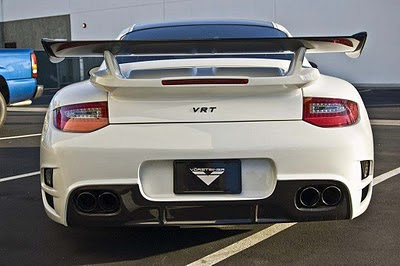
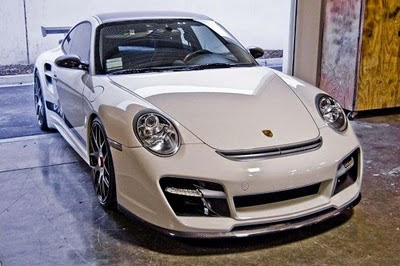
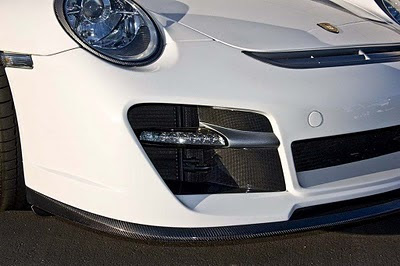
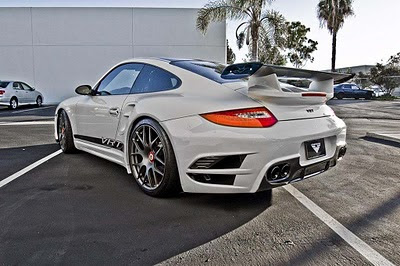
Take a look at this new car design Porsche 997 V-RT super sport car with new innovation Turbo engine official photos gallery shown below. If you not yet see the Porsche 997 V-RT specs before, read the car press release when the car tuning package and test drive performance report also included. Porsche 911 Turbo was refined by Vorsteiner which make some creative car modification with installing an aerodynamics vehicle body kit and a set of huge luxury alloy wheels. Vorsteiner Porsche 911 V-RT car model features new body kit consisting of larger carbon fiber air intakes exclusive of fog lights as in the Porsche GT2 vehicle version. At the rear view, the tuning specialists installed, presented to buy new car font bumper with a twin-finned carbon fiber rear diffuser for the quad exhaust system.
Porsche 997 V-RT Car Edition Turbo Engine Refined Vorsteiner

Porsche 997 V-RT Car Edition Turbo Engine Refined Vorsteiner

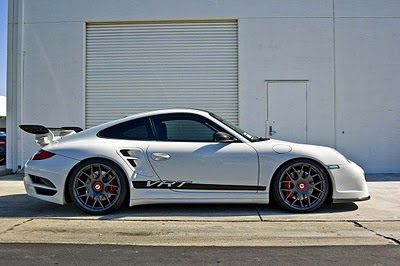
The Porsche 911 V-RT race car rims are three-piece V-306 20″ fitted with Michelin Pilot Sport PS2 tires for maximum grip at the race track as well as the public roads. The Porsche 911 V-RT engine is 3.6 litre twin-turbocharged flat-six with 480PS (353 kW) and 620Nm of torque. It catapults the car 100 km/h in 3.7 seconds (manual) and the top speed is 310 km/h (193 mph). There is an optional Sports Chrono overboost package, which increases torque to 680 Nm (500 lb-ft). More information, visit Porsche official website.
Porsche 997 V-RT Car Edition Turbo Engine Refined Vorsteiner

Porsche 997 V-RT Car Edition Turbo Engine Refined Vorsteiner

Porsche 997 V-RT Car Edition Turbo Engine Refined Vorsteiner

Porsche 997 V-RT Car Edition Turbo Engine Refined Vorsteiner

Porsche Boxster

Tuesday, June 7, 2011

Porsche Boxster

Over the years we’ve encountered some people who seem to take great pride and joy in turning their cars into replica exotics. Some have done a piss poor job at it while others have been good enough to make their cars ‘resemble’ these exotics, forgetting the fact that if any of the onlookers would dare lift the hood, the vehicle would be exposed as the fraud that it is. Then there’s this Bugatti Veyron that, upon first look, you would never take for a replica. Except that it actually is.

Porsche Boxster

The work done on the exterior of this vehicle to turn it into a Veyron is extremely impressive. So impressive, in fact, that it may not be obvious that the vehicle that lies underneath it is by no means a lightweight either. Hiding under that remarkably accurate Veyron casing is a Porsche Boxster. Sure, it doesn’t come with the 1,000 ponies the all-original Veyron has, but at 300 horsepower, it can hold its own against other sports cars. Just make sure you don’t put it up against the Ferraris and Lamborghinis of the world, unless, of course, you’re ready and willing to get smoked out of the water and caught with your pants down.

Porsche Boxster

The engine design is what is called a mid-engine layout. Essentially, the engine is place somewhere between the front and real axles. In the case of the Boxster, the engine rests right behind the cockpit.

The idea behind using a mid-engine type layout is to distribute the weight evenly throughout the vehicle. What this is does is then enhance the performance by increasing stability and traction while also improving the accelerating, braking and turning aspects as well. One other benefit is that the ride is much smoother than say traditional front end engine mount. The suspension is in a better situation to absorb bumps without the majority of the weight in the front of the car.

The Boxster was also the first Porsche model to have water cooling for regulating the engine temperature. With the engine located in the middle, cooling it became a priority. Most engines have the benefit of being in the front where it can be cooled by the wind. However, in this case, another alternative was required so Porsche added a water cooling component.

With the mid-engine design, there are two essential drawbacks. First, the engine is pretty much hidden inside the vehicle making routine maintenance a difficult situation. So, one of the things that Porsche did was build the engine to be able to use less maintenance which included longer life spark plugs, more comprehensive engine controls and self tightening fan belts. The second drawback is the reduced capacity for storage. With storage in the nose and rear of the vehicle, there is some but not a lot. You'll want to be as creative as possible if you intend to pack anything.

When Porsche set out to design and build a new sports car, they had the avid sports car enthusiast in mind. With state of the art engineering, the Porsche Boxster engine allows for a driving experience unparalleled to other roadsters in its class.

Porsche Boxster TechArt

Saturday, April 2, 2011

TechArt Porsche Boxster


Athletic Beauty: TechArt Widebody based on the Porsche Boxster (987)
Athletic beauty: The TechArt Widebody based on the Porsche Boxster of the 987 model range doesn't only offer spectacular design but also extra driving fun and agility. After the huge success of the Widebody concept for the first Boxster generation.

With the add-on fender flarings on front and rear axle the TechArt Widebody is eight centimeters wider than the standard car. The front extensions don't only provide extra room inside the wheel houses but also improve the deventilation of the heated up air with their integrated wheel-house ventilation. The rear flarings are equipped with largely dimensioned air ducts to bring fresh air to the centrally placed engine.

Apart from spectacular, sporty design the TechArt designers of course paid attention to optimal aerodynamic efficiency. The TechArt front spoiler bumper reduces the lift at the front axle and improves the cooling of the front brakes with large air ducts. The TechArt rear apron with integrated diffuser rounds out the conversion.

Extremely broad wheels and tires make the TechArt Widebody concept for the Boxster complete: Specially for this wide body version they developed custom-made versions of the one-piece TechArt Formula five spoke wheel. The front axle is equipped with wheels in size 8.5Jx20, the rear axle is equipped with 11Jx20 wheels.

After extensive test drives, TechArt Automobildesign recommends ContiSportContact 2 high performance tires in sizes 235/30 ZR 20 front and 305/25 ZR 20 rear for the Widebody based on the Porsche Boxster. The height-adjustable TechArt sport suspension is specially set-up for these ultra-wide wheels and tires and the wider track of the car. The coil-over suspension doesn't only provide an individual damping of the roadster but also lowers the two-seater car by some 25 millimeters. Boxster models with PASM system can be updated with the sporty set up TechArt coil over sport suspension.

TechArt also offers engine tuning for the Widebody. The two watercooled six-cylinder boxer engines can be upgraded with the TechArt power kits. They each consist of a sport air filter and newly programmed engine electronics. The result: 15 hp / 11 kW extra power and optimized road performance.

Being world-wide renowned specialists for exclusive interiors, TechArt provides individual full leather trims in all colors and designs. The range reaches from completing the ex-works leather trims up to a completely redesigned cockpit with special sports seats and ergonomically shaped airbag sports steering wheel.


TechArt Porsche 911 Turbo GTstreet R, 2008

Wednesday, December 1, 2010

TechArt Porsche 911 Turbo GTstreet R, 2008


TechArt Porsche 911 Turbo GTstreet R, 2008

TechArt presented the direct successor to the TechArt GTstreet RS - the new TechArt Porsche 911 Turbo GTstreet R.

'Quod erat demonstrandum' (this completes the proof) - it was with this sentence that Sir Isaac Newton always completed the presentation of his mathematics and physics-based evidence. At TechArt, the phrase stands for the challenge of kitting out 'Non plus ultra' ex works vehicles with impressive performance capabilities. The result: the TechArt GTstreet RS based on the Porsche 911 GT2.

The vehicle concept is now being applied to the Porsche 911 Turbo in the form of the TechArt GTstreet R. The latest addition to the TechArt GTstreet family, which has stood for uncompromising sportiness since 2001, is therefore one of the world's top performing sports cars.

Impressive performance data

The TechArt Porsche 911 Turbo GTstreet R is fitted with the TechArt performance kit TA097/T3 with an engine performance of 485 kW (660 hp) and a maximum torque of 860 Nm at 4,600 rpm. The GTstreet R with Tiptronic S can accelerate from 0 to 100 km/h in just 3.4 seconds and with manual transmission it only takes a tenth of a second longer. The remarkable propulsion levels out at a top speed of 345 km/h.

An ample increase in performance is guaranteed thanks to the new turbochargers, large carbon fibre inlet pipes, special intercoolers, a sports exhaust system combined with high-performance manifolds and an improved sports air filter. A balanced downforce on the front and back axels and specially adapted TechArt VarioPlus coil over suspension guarantee excellent driving performance at high speeds and ensure extra driving stability and safety.

Technology meets emotion

The design of the car body brings sporting agility and a perfect exterior design. The aero-bonnet, headlight trims and mirror trims, striking sill panels and carbon fibre roof spoiler characterise the dynamic design of this sports car. Precise air ducts on the front spoiler and rear wing optimise the engine ventilation. The striking rear apron with its carbon fibre diffuser and air ducts to the intercooler are additional special features of the comprehensive TechArt Porsche 911 Turbo GTstreet R aerodynamic programme.

TechArt interiors stand for exceptional quality and care worldwide and are produced by hand at the TechArt saddlers department. This also applies to the diverse range of interiors available for the TechArt Porsche 911 Turbo GTstreet R. A high degree of design freedom is on offer including individually tailored leather fittings, striking decorative stitching and sporty highlights in individual colour combinations. Additional accessories such as the non-slip TechArt 3-spoke sports wheel, aluminium pedals and much more round off this comprehensive range of interiors.

TechArt Porsche 911 Turbo GTstreet Cabrio, 2008

TechArt Porsche 911 Turbo GTstreet Cabrio, 2008


Uncompromisingly sporty, unreservedly suitable for everyday use. TECHART is continuing this traditional philosophy with its GTstreet Cabrio. Since 2001, when the Porsche 911 Turbo model from the 996 series was used, vehicles bearing the TECHART GTstreet logo have been among the fastest and highest performing road-worthy sports vehicles in the world.

The new TECHART GTstreet is continuing this impressive trend, based on the current Porsche 911 Turbo generation. At the world premiere on 4th March 2008, this convertible model will stand alongside the GTstreet Coupé, which was officially launched in Geneva in spring 2007 and caused a real sensation.

Unmistakable characteristic appearance and breath-taking performance. The TECHART GTstreet Cabrio now develops 463 kW (630 hp) and can reach a maximum speed of 345 km/h.

TechArt Porsche Cayenne, 2008

TechArt Porsche Cayenne, 2008


TECHART Automobildesign is presenting an extensive technology programme at the IAA 2007 with a brand new individualisation programme for the TECHART SUV on the basis of the Cayenne (model 2008).

Through the Aerodynamic Kit I, the TECHART SUV is given its perfectly formed line with an unmistakeable recognition value. The front spoiler, sill panels and rear diffuser have been revised and lend the TECHART SUV its sporting and elegant look. All chassis parts are manufactured as first fit made of PUR-RIM plastic. The sporty off and on-road vehicle thus receives the dynamic line of the Cayenne Facelift.

The TECHART Sport Module provides the option of lowering the SUV chassis by an impressive 30 millimetres - which simplifies road use and makes it more attractive. The entire adjustment range from the load level to the special terrain level is roughly 110 millimetres.

As an option, the TECHART SUV on the basis of the Cayenne Turbo can be ordered with a performance of up to 620 hp / 456 KW. A carbon cover and individually modified painting of various engine parts round off the engine optic package for this automobile highlight. In terms of tyres and rims, the designers from the House of TECHART leave none of their customers' wishes unfulfilled - the options range from Formula I rims in 10x20 ET 55 with 295/40 ZR 20 or 10x22 ET 55 with 295/30 ZR 22 on front and rear axles through to TECHART Formula II light metal rims in the dimensions 10.5Jx22. As an optimum tyre for the Formula II rims, the enhancers recommend ContiCrossContact UHP tyres in the size 295/30 ZR 22.

The format for the TECHART SUV is not simply characterised by state of the art technological standards, but also by the endless repertoire of countless options for the interior. Exclusive accessories include ergonomically formed sports steering wheels, state of the art multimedia systems or carbon applications for the cockpit in various colour options. More individual wishes can be fulfilled with exclusive TECHART full leather fittings in all conceivable colours and upholstery designs. A particularly precious version is the TECHART interior line de Sede of Switzerland, which is created in cooperation with the Swiss furniture manufactory. The high quality de Sede leather hides, which are processed to produce perfectly crafted covers for seats, door and side panels, instrument panels, roof side members and roof in the in-house TECHART upholstery shop, complete the automobile work of art of the TECHART SUV.

Porsche 911 GT2 GTstreet RS, 2008

TechArt Porsche 911 GT2 GTstreet RS, 2008


Since 2001, TechArt GTstreet vehicles have been among the fastest and highest performance sports cars in the world. This high performance is reflected in the TechArt Porsche 911 GT2 GTstreet RS's statistics - 700 PS and 515 KW - with a maximum torque of 860 Nm. This power is achieved through the use of modified turbochargers, enlarged carbon inlet pipes, specially developed intercoolers, a sports flap exhaust combined with high-performance headers, modified pressure sensor and a sports air filter. The GTstreet model demonstrates a high level of performance in the wind tunnel: with a downforce of 10 kilos on the front and rear axles at a speed of 140 km/h.

TechArt Porsche 911 GT2 GTstreet RS front apron is fitted with a carbon splitter. A special air duct has been constructed to enable the cool air to pass directly behind the radiator and over the newly created air outlet thereby reducing the buoyant force on the front axle considerably. Side carbon flics support this effect in that they increase the downforce considerably by acting as a counterpart. All of the sporty basics are featured, creating a sporty appearance and fast model with its aero-bonnet, headlight shades, mirror shades, GT sill panels and carbon roof spoiler. The GT rear spoiler is particularly striking with its carbon winglets and gurney flaps. The TechArt Porsche 911 GT2 GTstreet RS rear apron with carbon diffuser, air outlet and carbon air wings complete the programme for this club sports car.

The performance of the TechArt Porsche 911 GT2 GTstreet RS is also reflected in the chassis. With its TechArt Formula III forged rims and Michelin Pilot Sport Cup Plus tyres, the GTstreet RS offers drivers the maximum performance for a street-worthy sports car. The impressive 1.06,811 min. lap time on the short Hockenheim course emphasises yet again the GTstreet RS's ambitions on becoming one of the fastest sports cars in the world. The special TechArt threaded chassis is also available for the TechArt Porsche 911 GT2 GTstreet RS.

From coloured decorative stitching to complete leather furnishings in the colour of your choice or decorative components in various materials such as carbon or piano lacquer, TechArt offers a virtually endless range of possibilities to meet all tastes in furnishings. Additional accessories such as aluminium pedals, a 3-spoke sports steering wheel and illuminated door sill protectors with an individual logo complete this diverse range of furnishing options.

Porsche Cayenne Magnum, 2008

TechArt Porsche Cayenne Magnum, 2008


With more than 500 produced units the Magnum is the most successful model in the 20-year history of TECHART Automobildesign. At the Frankfurt International Auto Show IAA 2007 the new TECHART Magnum based on the latest Porsche Cayenne celebrates its world debut.

Like its predecessor the new TECHART Magnum sets itself apart with a spectacular aerodynamic-enhancement package that fits all versions of the Porsche SUV. All body components are manufactured from PUR-RIM plastic in OEM quality.

The curved TECHART fender flares add eight centimeters to the width of the Cayenne. The Magnum rocker panels provide a fluent transition between the wider wheel arches.

The new aprons for front and rear that replace their production counterparts were designed to correspond visually to the more pronounced contours of the wheel arches. The TECHART Magnum front apron lends the latest Cayenne generation an even more striking appearance. Its large air inlets feature elegantly styled slats and provide ample cooling air for radiators and front brakes. A total of four auxiliary headlights and daytime running lights improve active safety.

The TECHART Magnum rear apron with integrated diffuser reduces lift on the rear axle and provides the perfect backdrop for the TECHART stainless-steel sport exhaust system with two chrome tailpipes on either side.

The body conversion can be rounded out with moldings for front and rear lights, as well as with a new hood that features two air outlets that optimize heat balance in the engine bay.

The Magnum features custom-tailored wheels and tires. The largest possible version features TECHART Formula II light-alloy wheels in size 10.5Jx22 in front and in size 11,5Jx22 in the rear. For optimal tires TECHART chose ContiCrossContact UHP tires in sizes 295/30 ZR 22 and 335/25 ZR 22, which are approved on the Cayenne for a top speed of 300 km/h.

These tires make the Magnum a prime candidate for the engine tuning of the Cayenne Turbo that is currently under development and in its most powerful incarnation will produce up to 620 hp / 456 kW.

The air suspension of the Cayenne Turbo is modified with the TECHART sport module that lowers the ride height for enthusiastic on-road driving by 30 millimeters. The entire range of adjustment from the lowest ride height (loading level) to the highest (special off-road level) measures some 110 millimeters.

The TECHART Magnum repertoire also includes countless interior options. The range of products starts with exclusive accessories such as an ergonomically shaped sport steering wheel and carbon-fiber applications for the cockpit, available in a number of different colors.

Requests for an even higher degree of customization can be fulfilled with exclusive TECHART fully leather interiors in any color and design imaginable.

The TECHART interior line de Sede of Switzerland, created in cooperation with the Swiss furniture manufacturer, represents an especially exclusive option. The high-quality de Sede leather skins are transformed by the company-own TECHART upholstery shop into meticulously finished upholstery for seats, door and side trim, dashboard, roof pillars and headliner.

Hamann Porsche 911 Turbo Stallion, 2008

Hamann Porsche 911 Turbo Stallion, 2008


Less roof - more wings

The most striking eye-catcher of the individualised Porsche is the lowered roofline. For this elaborate reconstruction, Hamann reduces the windows and pillars up to 8 centimetres. Thereby, the reduced front surface diminishes the air resistance and therefore the fuel consumption. Moreover, this relieves the motor drastically while pushing for maximum speed. But that´s not all: Hamann equips the Stallion with gull-wing doors allowing the door to swing diagonally outward from the body of the car. This proprietary development does not only have an extravagant design, but also an exceptional stability. The combination between the Hamann front- and rear skirt with the altered heck spoiler profile and the roof spoiler produce additional road grip. Side spoilers between the axles put a finishing tough to the overall appearance.

Sensational performance based on well-engineered technology

The core of the Hamann Stallion is its modified engine. The Hamann motor technicians enhance the 3.6 litres Boxer Biturbo motor from standard 480 hp / 353 kW to 630 hp / 463 kW at 6,300 rpm. The upgrade also includes two larger VNT (variable nozzle turbochargers), a sport air strainer, a stainless steel exhaust system with metal catalytic converters and a new motor management.

These are measures which certainly hit their target. The Hamann Stallion accelerates to 100 km/h in only 3.3 seconds and is therefore six tenth of a second faster than its serial counterpart. The new maximum speed tag is sensational. With its efficiency boost and the reduced air resistance by Hamann-Aerodynamics, the Stallion achieves a maximum speed of 359 km/h.

Wheels and chassis - the combination for best roadholding and exclusive appearance

Hamann developed a sport chassis and a matching wheel-/tyre-combination for the optimal handling of the increased requirements of the Hamann Stallion. The three-part Hamann aluminium wheel named EDITION RACE with its black lacquered star and the titan bolting of the high gloss polished rim flange clearly emphasise the affinity of the Laupheim-based refiner to motor sports.

Due to its forge technology production, it is very light and therefore significantly improves the handling- and driving qualities. The wheel-tyre combination is available in 8,5Jx20 inches with tyres measuring 245/30ZR20 in front and 12,0Jx20 rims with 325/25ZR20 tyres at the back.

Hamann recommends top-level tyres type S1 EVO by its technology partner Hankook.

Lowering the vehicle centre by 20 mm with Hamann sport coils also significantly improves the handling.

Perfect combination between motor sports and lifestyle

Only the most precious materials can be found in the Hamann Stallion interior. The Hamann upholsterers only use selected leather for covering the fittings and sport seats. Aluminium gear shift and aluminium pedals make the cockpit gleam in a noble look and perfectly match with the carbon parts of the interior set. Precisely applied embroideries of the Hamann logo in the floor mats and headrests set further creative accents. All of these features complement one another in a stylish symbioses of motor sports flair and lifestyle

2011 Porsche 918 Spyder Hybrid Wallpaper Gallery

Saturday, October 30, 2010

2011 Porsche 918 Spyder Hybrid

2011 Porsche 918 Spyder Hybrid

2011 Porsche 918 Spyder Hybrid

2011 Porsche 918 Spyder Hybrid

2011 Porsche 918 Spyder Hybrid

2011 Porsche 918 Spyder Hybrid

2011 Porsche 918 Spyder Hybrid

2011 Porsche 911 Carrera GTS

Wednesday, September 15, 2010

2011 Porsche 911 Carrera GTS


If you're in the market for a new 911, but don't want the same Carrera S as your neighbor and the GT3 is just a wee bit too hardcore for your tastes, we don't understand you. Thankfully, Porsche does and the answer to your prayers is coming to Paris. Meet the 2011 Porsche Carrera 911 GTS, the new middle-child of the ass-engined family.

If the body work looks familiar, that's because it's cribbed from the all-wheel drive Carrera 4 – a trick Porsche has pulled off several times in the past. Nestled between that 44mm wider track is an upgraded 3.8-liter flat-six putting out 408 horsepower (23 more than the standard S, 27 less than the GT3) and 310 pound-feet of torque, now peaking at 4,200 rpm – 200 rpm earlier than in the S.

Power is sent exclusively to the rear wheels (and as it should be), with a manual six-speed transmission coming standard and a seven-speed PDK as an option. Select the Sport Chrono package along with the dual-clutch 'box, and Porsche claims you'll be cracking off four-second 0-60 runs all day long.

Aside from the widened haunches, the GTS is set apart by its 19-inch center-hub RS Spyder wheels, SportDesign front and rear fascias, black Alcantara trim and assorted body and interior bits.

After the GTS debuts in Paris, sales of both the coupe and cabriolet versions will begin early next year, with a starting price of $103,100 and $112,900, respectively.

2010 Porsche Cayenne Turbo

Saturday, September 4, 2010

UK based tuning company Merdad have announced plans for a conversion kit for the Porsche Cayenne Turbo, and the kit in question converts the four-door SUV into a two-door “coupe”. Amazing, it’s looks more like a three-door super sized supermini. The rear section is by pushing the front seats forward, as in coupes.  

2011 Porsche Cayenne by Lumma Design

Thursday, August 5, 2010

Lumma Design 2011 Porsche Cayenne

Owners of the second generation Porsche Cayenne have another range of styling and performance accessories to consider with the unveiling of Lumma Design’s latest items.

When it comes to styling, Lumma Design offers headlight masks and Mono alloy wheels (22- or 23-inches). The company suggests installing matte aluminum sill plates, aluminum / rubber pedals, and floor mats with leather edging in the cabin. Owners may also approach Lumma Design to order a D-Box that makes the 3.0-liter V6 deliver 272 hp and 630 Nm (465 lb-ft) rather than 236 hp and 550 Nm (406 lb-ft) of torque. Lumma Design also now offers an engine cover and a sport exhaust system with two 90mm tailpipes.